Politics · Land use
The land-use law that could freeze Alpine construction — and what it means for buyers of new-builds
A national law designed to stop suburban sprawl around French cities was not written with ski resorts in mind — but it now governs them anyway. Mountain mayors are furious, developers are recalculating, and buyers on a new-build waiting list should be paying close attention.
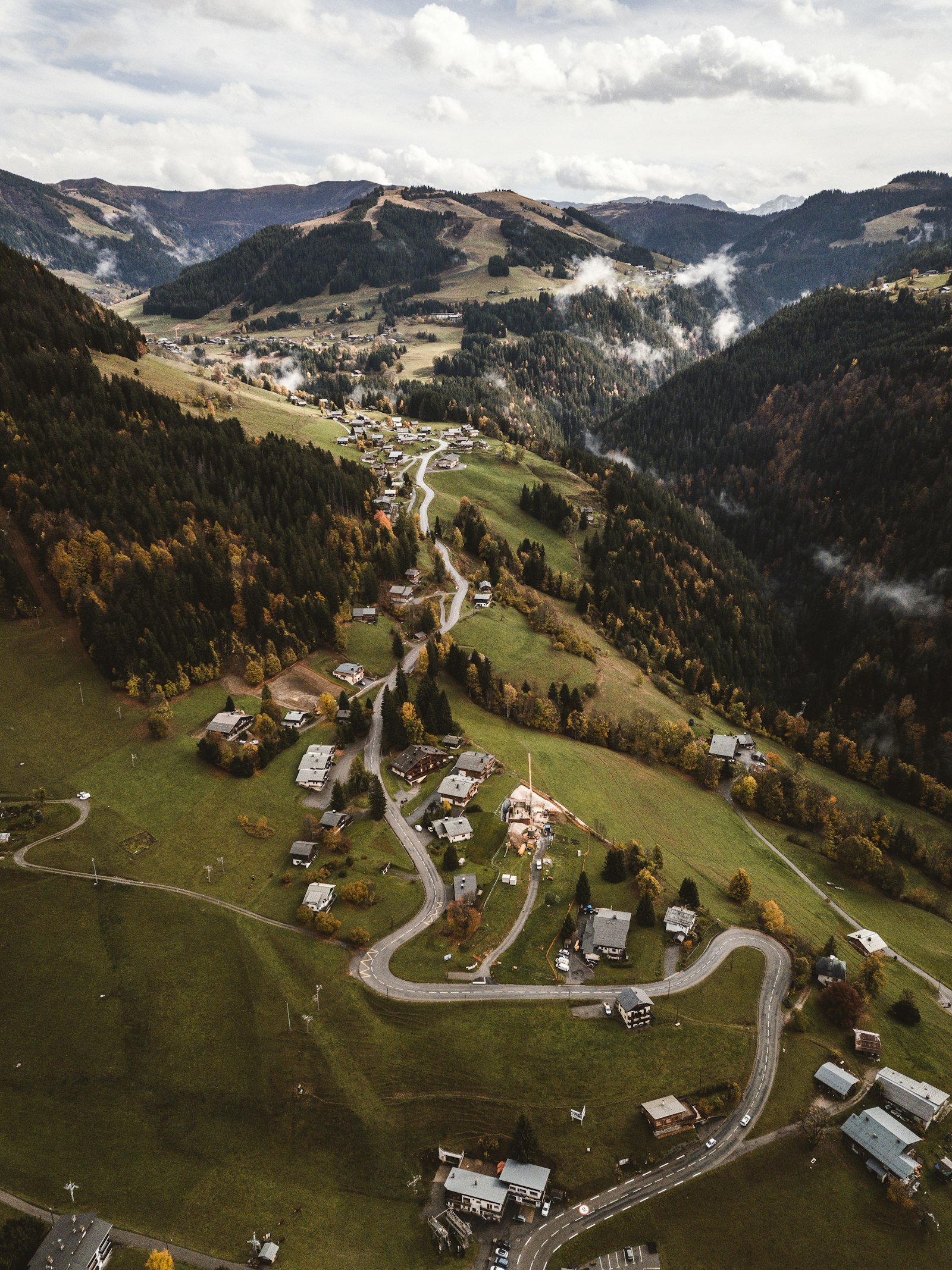
The law is called Zéro Artificialisation Nette — zero net land take — and it was conceived for a problem that has almost nothing to do with the Alps: the relentless sprawl of car-dependent housing estates and commercial zones around French cities, eating farmland at a rate the 2021 Climate and Resilience law decided had to stop. The target is a 50% cut in new land development by 2031, on the way to genuine zero net artificialisation by 2050. Nobody in the legislative debate was picturing Val d'Isère. But the law applies territorially, without a resort exemption, and mountain mayors have spent the past eighteen months discovering exactly what that means for a chalet development already three years into planning.
How the mechanism works
ZAN operates through the SRADDET — each region's territorial planning document — which allocates a shrinking land-development budget to every commune via its intercommunalité. A commune that wants to open new building land for a chalet programme must now show either that the land was already accounted for in a prior urbanisation envelope, or that an equivalent area of artificialised land elsewhere in the commune is returned to natural, agricultural or forest use — a renaturation offset, the planning-law equivalent of a carbon credit. For a resort commune where nearly every buildable valley-floor hectare was developed decades ago and the remaining land is either forest, alpage or protected slope, the arithmetic is brutal.
The resort mayors' objection
The Association nationale des maires des stations de montagne — the mountain resort mayors' association — has lobbied Paris for a resort-specific adaptation since 2023, and its argument has a certain force: a law designed to stop horizontal suburban sprawl is being applied, unmodified, to communes whose entire economic model is a fixed, already-dense footprint that cannot expand horizontally at all — ringed as they are by national park boundaries, avalanche-risk zones and slopes too steep to build. Where a peri-urban commune near Lyon has genuine sprawl to restrain, a resort commune argues it has none: its historic development pattern is already the compact, land-efficient model that ZAN elsewhere is trying to create.
"We built up, not out, a hundred years ago because the mountain gave us no choice. Now we are told to offset construction we haven't done yet against sprawl we never had. The law is punishing the wrong sinner."
Mayor, Tarentaise resort commune, ANMSM working group
What has actually changed on the ground
| Effect | Detail |
|---|---|
| New building permits | Communes near their SRADDET land ceiling are freezing new zonage until the 2031 review |
| Renaturation offset market | Emerging informal market in communes trading offset land internally between projects |
| Densification incentive | Rooftop extensions, roof-raising and infill on already-artificialised plots exempted — booming as a workaround |
| Renovation over new-build | Renovating an existing dérelict chalet counts as zero new artificialisation — sharply increased developer interest |
The practical result, visible already in several Tarentaise and Haute-Savoie communes, is a pivot in developer strategy: away from greenfield chalet programmes on the resort periphery and toward densification of already-built land — roof-raising, extension, and the demolition-and-rebuild of tired 1970s résidences at higher density on the same footprint. Several of the "new-build" projects discussed in our Val d'Isère buying guide are, in fact, exactly this kind of renovation-led development, and ZAN is part of why: it is now the path of least regulatory resistance.
What it means for buyers on a waiting list
- Ask directly whether a project's land was zoned before ZAN's local implementation date. Pre-existing zonage is generally grandfathered; new zonage requests are where delays concentrate.
- Renovation-led developments carry less permitting risk than greenfield ones in a land-constrained commune — a genuine factor in comparing two otherwise similar off-plan offers.
- Expect scarcity to support prices, not undermine them. A genuine cap on new construction in already land-constrained resorts is, over time, a tailwind for existing stock and for the new-build projects that do clear permitting — the ANMSM's objection is about fairness and process, not really about whether the law will bite.
- Watch the 2027 SRADDET review cycle. Regional land-development budgets are revisited periodically; a commune tight against its ceiling this year may have more room after a reallocation, or less.
The mountain mayors are not going to win an outright resort exemption — the political optics of carving wealthy ski resorts out of an environmental land-use law are poor, whatever the planning logic. What they are likely to win, and are currently negotiating, is a methodological adjustment: crediting the vertical density of historic Alpine urbanisation against the horizontal-sprawl metric ZAN was built to measure. Until that lands, every new-build conversation in a resort commune now has an extra, unglamorous question buried in the due diligence: is there any land left to build on, and who decided that there was.
The legal architecture, in full
ZAN's statutory basis is Article 191 of the loi Climat et Résilience of August 2021, which set the national trajectory: a 50% reduction in the pace of net land artificialisation for the 2021–2031 decade compared with the preceding decade, en route to genuine zero net artificialisation nationally by 2050. The law delegates implementation to the regions via the SRADDET (Schéma Régional d'Aménagement, de Développement Durable et d'Égalité des Territoires), which must translate the national trajectory into département- and intercommunalité-level land budgets. The Ministry of Ecological Transition's official ZAN portal maintains the current implementation texts and department-by-department status; the definitions of what counts as "artificialised" land — a technical question with large practical consequences — were significantly clarified by a 2023 decree after complaints from local authorities that the original definitions were unworkable.
Why mountain communes are structurally disadvantaged by the metric
The ZAN land-budget allocation methodology, as currently implemented in most SRADDET documents, weighs historical consumption over a reference decade (broadly 2011–2021) — meaning a commune that already built extensively in that window inherits a smaller remaining budget than one that built little. This creates a perverse dynamic for resort communes: those that grew fastest in the pre-ZAN decade, often precisely because tourism demand was strongest, now face the tightest remaining land-development ceiling under the new regime, while less commercially successful communes retain comparatively more room. The Association nationale des maires des stations de montagne has specifically flagged this historical-baseline mechanism, rather than the ZAN principle itself, as the element most in need of adaptation for mountain territories.
The renaturation offset market
Where a commune wants to open genuinely new building land beyond its remaining budget, the law permits doing so if an equivalent area of already-artificialised land elsewhere in the same commune (or, under some SRADDET frameworks, the same intercommunalité) is returned to a natural, agricultural or forestry state — demolished, cleared, and formally reclassified. In practice this has created an informal internal market within land-constrained resort communes: a developer wanting to build a new chalet programme may fund the demolition and renaturation of, say, a derelict 1960s garage block or an abandoned agricultural building elsewhere in the commune, banking the freed artificialisation credit against the new project. Several Haute-Savoie communes are now formalising this into a registered local offset scheme, partly to prevent informal deals that lack transparency or environmental rigour.
| Path to new construction | How it works | Typical use case |
|---|---|---|
| Pre-existing zonage | Land already designated in a plan approved before ZAN's local cutoff | Projects already in the pipeline before 2021–23 |
| Renaturation offset | Fund equivalent land returned to nature elsewhere in commune | New chalet programmes in built-out resorts |
| Densification (exempt) | Building on already-artificialised footprint — extension, roof-raise, infill | Rapidly growing share of new units |
| Renovation-led (exempt) | Demolish and rebuild at higher density on same footprint | Ageing 1970s résidences, increasingly favoured by developers |
What buyers on a new-build waiting list should actually ask
The most useful due-diligence question a buyer can now put to a developer is not "when will it be built" but "how was the land secured under ZAN" — because the answer predicts the permitting risk far better than a marketing timeline does. A project on pre-existing zonage carries essentially no ZAN-related risk. A project depending on a not-yet-finalised renaturation offset carries genuine execution risk: the offset land must itself clear its own permitting and reclassification process, and a stalled offset stalls the new development it was meant to fund. Ask the developer directly for the offset parcel's own file status, not just the headline delivery date — and treat a vague answer as a warning sign in exactly the way a vague answer about financing would be.
Related: how the new-build pipeline in one high-demand resort is already adapting, and the other lever communes use to manage second-home demand.
[Preview edition — this article is illustrative while Issue No. 1 is in preparation.]
Advertisement
Partner · Property
Domosno
New-build and resale ski property across the French Alps. English-speaking, VAT-reclaim specialists.
View listings