Property · Market intelligence
Serre Chevalier: the Alpes du Sud resort quietly outperforming its northern rivals
This newspaper's territory has, until now, meant the north — Chamonix, Megève, the Tarentaise. But south of the Écrins, a fortified medieval town and a 250km ski domain have been quietly delivering the numbers northern buyers have priced themselves out of. It is time we said so.
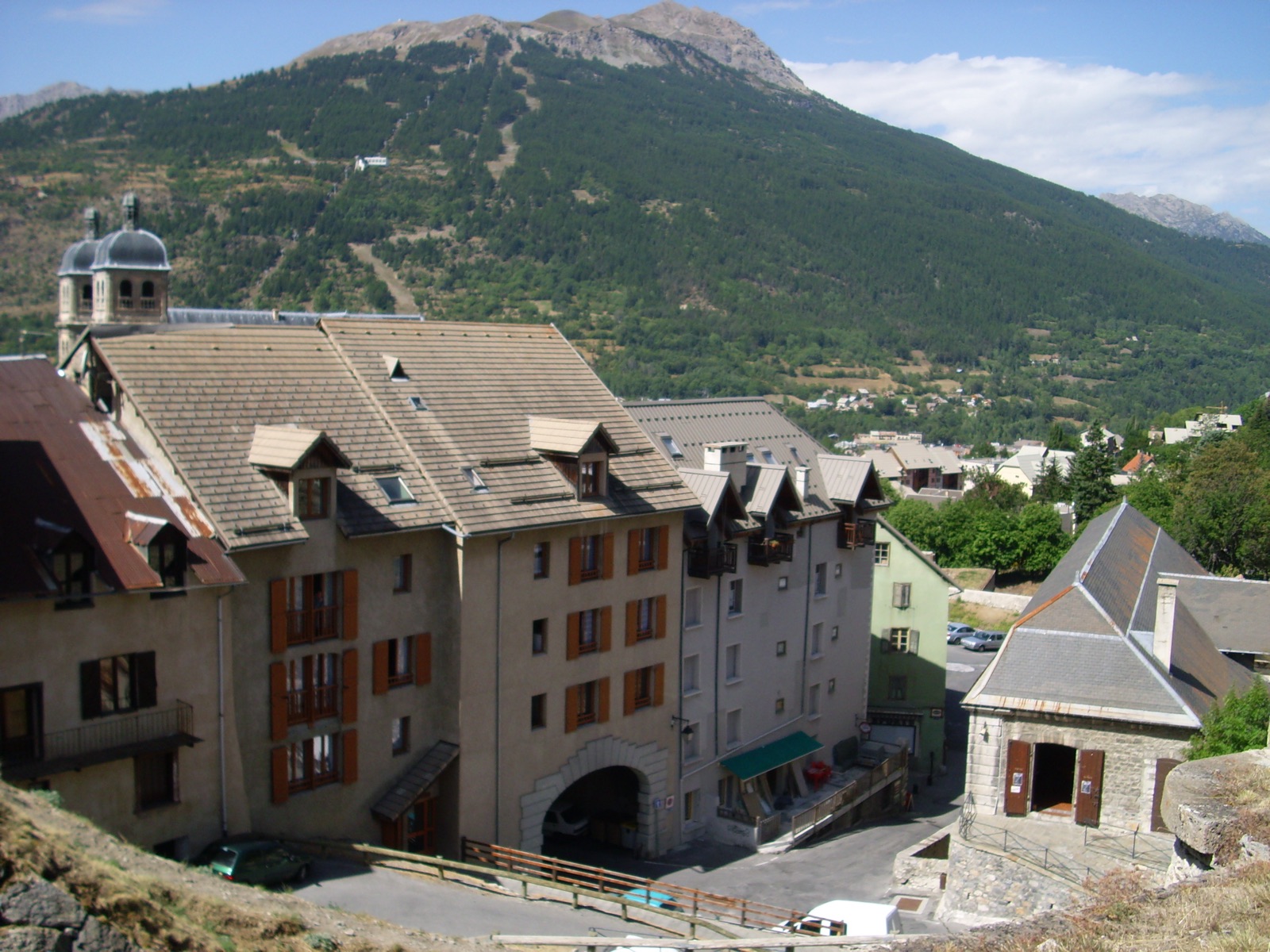
Every edition of this newspaper has, so far, been a newspaper of the north. Chamonix, Megève, Val d'Isère, the Tarentaise valleys — the territory where this publication's readers have historically bought, and where its advertisers sell. That territory has a problem its residents rarely say out loud in public: it has become extremely expensive, driven as much by Geneva's gravitational pull and Paris money as by anything to do with skiing itself. Two hundred kilometres south, across the Écrins massif, a different Alps has been quietly building one of the largest connected ski domains in France, in a region this masthead's own tagline names — Alpes du Sud — and has almost entirely failed to cover. That changes today.
The domain, and the town that anchors it
Serre Chevalier is not one resort but a linked domain of four villages — Briançon, Chantemerle, Villeneuve and Le Monêtier-les-Bains — strung along the Guisane valley beneath 250km of pisted terrain rising to nearly 2,800 metres. Briançon itself, the domain's largest town and the highest city in the European Union at 1,326 metres, is a genuine fortified city, not a purpose-built resort: a UNESCO World Heritage Vauban citadel, a functioning old town with a permanent population and a full-year economy that does not empty out in May the way a purpose-built 1960s station does. That distinction — a real town with a ski lift, rather than a ski lift with a town built around it — is, for a certain kind of buyer, the entire pitch.
The price gap, stated plainly
| Market | Typical apartment €/m² | Comparable northern equivalent |
|---|---|---|
| Briançon old town | €2,500–4,000 | Any Haute-Savoie valley town, easily double |
| Chantemerle / Villeneuve (ski-in) | €4,000–6,500 | Comparable ski-in Portes du Soleil stock: €6,000–9,000 |
| Le Monêtier-les-Bains | €3,000–5,000 | Quieter northern equivalent (e.g. Samoëns): €5,500–8,000 |
| New-build, domain-wide | €6,500–9,000 | Comparable Tarentaise new-build: €10,000–15,000 |
The gap is not a data anomaly and it is not because the skiing is worse — 250km puts Serre Chevalier ahead of most of the individual resorts this paper has covered in the north, save the very largest linked domains like the Trois Vallées. The gap is about proximity and perception: no Geneva commuter economy inflating the base, no direct high-speed rail from Paris, and a regional identity — "the Alps," full stop, without the "Haute-Savoie" or "Savoie" qualifier that northern marketing leans on — that has kept the south under-discovered by the international buyer pool this newspaper's readers belong to.
"Buyers who've done their homework in Méribel or Morzine arrive here and ask me, genuinely, what's wrong with it. Nothing is wrong with it. It's simply two hundred kilometres further from Geneva airport, and that turns out to be worth an enormous amount of money to a market that doesn't do its homework."
Estate agent, Serre Chevalier — twenty-two years in the domain
What buyers should weigh honestly
- Access is the real trade-off. The nearest significant airport is Turin (2h) or Marseille/Grenoble (2.5–3h); there is no Geneva-style short hop. A TGV to Briançon exists but is slow relative to the Chambéry/Bourg-Saint-Maurice lines serving the Tarentaise. Buyers used to a 90-minute Geneva transfer should price in a longer, less frequent journey.
- The sun exposure is a genuine, not marketing, advantage. The Hautes-Alpes department records among the highest annual sunshine hours in France — a real climatic difference from the more cloud-prone northern valleys, and a meaningful factor for a summer-season property strategy.
- Rental demand is real but seasonally different. Serre Chevalier's clientele skews more heavily French and domestic than the internationally-marketed north — a stable but different demand base, worth understanding before assuming northern rental yields transfer south.
- The domain's snow reliability sits lower than the very highest Tarentaise resorts — Serre Chevalier's base villages are lower altitude than Val d'Isère or Tignes, though snowmaking coverage has expanded significantly and the upper slopes hold their own.
Why this paper is starting to look south
The honest answer is that the north's own success has created the opportunity. Every mechanism this newspaper has documented — the second-home surtax, the ZAN construction freeze, the Geneva frontalier premium — points the same direction: scarcity and cost pressure in the north, absorbed by a market that has, so far, had nowhere else within France to look. The Alpes du Sud is not undiscovered exactly — the French have always known Serre Chevalier — but it is undiscovered by the specific, internationally-minded buyer this paper writes for. That is a gap this paper intends to keep closing.
Briançon, specifically: the fortified city angle
Briançon's Vauban fortifications — the citadel and ramparts designed by Louis XIV's military engineer Sébastien Le Prestre de Vauban in the late 17th century — are part of a twelve-site UNESCO World Heritage inscription covering Vauban's fortification network across France, a heritage designation shared with only a handful of other French towns and one that provides Briançon with a genuine, defensible tourism identity entirely independent of skiing. The old town (Ville Haute) sits within the fortifications, and property inside the walls carries specific heritage-conservation planning rules — the ABF (Architecte des Bâtiments de France) must approve significant exterior renovation work, a real constraint but also a real protection against the kind of unchecked 1960s-style redevelopment that reshaped less protected resort centres further north. Buyers considering the old town should factor ABF approval timelines into any renovation plan from the outset.
The domain's connectivity, in detail
| Village | Altitude | Character |
|---|---|---|
| Briançon | 1,326m | Fortified city, year-round economy, gateway village |
| Chantemerle | 1,350m | Main lift base, family-oriented, largest single lift capacity |
| Villeneuve-la-Salle | 1,400m | Central, good amenities, most purpose-built resort feel |
| Le Monêtier-les-Bains | 1,500m | Quietest, thermal spa, least developed |
The four-village structure means the domain, unusually, does not force a single architectural or atmospheric choice on a buyer the way a single-village resort does — a buyer can choose Briançon's historic density, Chantemerle's family-lift-base convenience, or Le Monêtier's quiet thermal-spa atmosphere while retaining full access to the same 250km lift network via a single pass. The thermal baths at Le Monêtier (Grands Bains du Monêtier), fed by a genuine natural hot spring, are a further point of differentiation from the domain's northern equivalents — few Haute-Savoie or Savoie resorts offer a comparable natural thermal amenity.
The Hautes-Alpes sunshine data
The department's claim to France's highest annual sunshine hours is not mere marketing copy — Météo-France's long-run station data consistently places Hautes-Alpes and neighbouring Alpes-de-Haute-Provence stations among the sunniest in mainland France, a function of the region's more southerly latitude and its position in the rain shadow created by the Écrins and surrounding ranges relative to prevailing Atlantic weather systems. For a buyer weighing a genuine summer-and-winter dual-season property rather than a winter-only chalet, the sunshine data is arguably more consequential to daily quality of life than the ski-domain size comparison this piece leads with — worth independent research at meteofrance.com before any purchase decision.
The access question, resolved practically
The absence of a Geneva-style short-hop airport is real, but the practical alternatives are more workable than the headline gap suggests. Turin airport (Italy) sits roughly two hours by road via the Fréjus or Montgenèvre routes and is increasingly served by budget carriers from UK regional airports. Grenoble and Marseille-Provence both sit within a comparable range with more extensive UK and northern-European connections. The TGV network reaches Briançon via Grenoble or via the Oulx/Bardonecchia Italian connection with a change, a journey of five to six hours from Paris — slower than the direct Chambéry or Bourg-Saint-Maurice TGV services this newspaper's northern coverage takes for granted, but a genuine and increasingly used option for buyers without a car-based journey preference.
Related: the northern tax pressures reshaping where buyers look, and financing a purchase outside the traditionally-covered northern markets.
[Preview edition — this article is illustrative while Issue No. 1 is in preparation.]
Advertisement
Partner · Property
Domosno
New-build and resale ski property across the French Alps. English-speaking, VAT-reclaim specialists.
View listings