Property · Market intelligence
Val d'Isère — a buyer's guide to the resort with no ceiling
The most expensive lift-accessible resort in France has never been cheap — but its property market is more nuanced than the €30,000-per-square-metre headline suggests. Here is what buyers discover after they start looking.
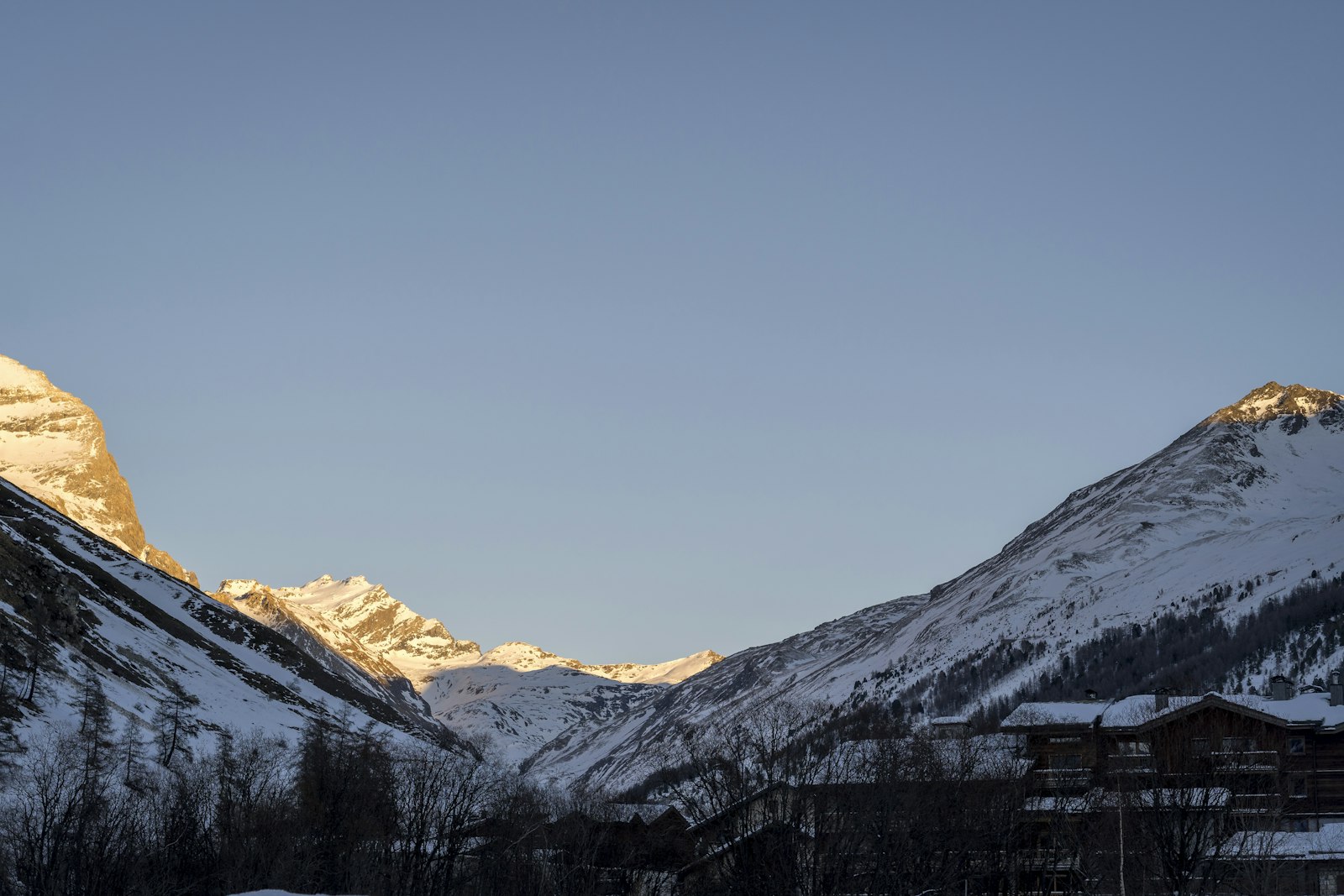
Most buyers arrive at Val d'Isère with a number in mind and leave with a different one. The resort's reputation as the ceiling of French Alpine property is not entirely wrong — average transaction prices routinely top €15,000 per square metre — but the range is wider than the headline implies, and the gap between what a first-time buyer imagines and what they can actually acquire is, in most years, bridgeable. What requires more work is understanding what you are buying before you buy it.
The price map
Val d'Isère is not one market. It is four neighbourhoods with distinct characters, different supply dynamics, and prices that diverge by as much as €12,000 per square metre between the cheapest and the most sought-after buildings.
| Zone | Character | Typical range €/m² |
|---|---|---|
| Le Laisinant / village east | Quietest, residential, walk to slopes modest | €9,000–13,000 |
| Village centre | Ski-in or short walk, high rental demand | €14,000–22,000 |
| La Daille | Ski-in on Grande Motte side, older stock | €10,000–15,000 |
| Front-line Bellevarde | Ski-to-door on the racing piste, new-build premium | €22,000–35,000+ |
Those top-line figures reflect genuinely exceptional product: a true ski-in/ski-out duplex penthouse above the Bellevarde bubble, finished by a decorator whose other clients are in Geneva's banking district. The modal transaction — a well-positioned two-bedroom apartment in a mid-2000s building, walk to slopes — closes somewhere between €14,000 and €18,000 per square metre, and there are agency-listed properties that shade below €12,000 in older buildings east of the village.
What the supply actually looks like
Val d'Isère's housing stock skews sharply toward studios and one-bedroom apartments — the legacy of the resort's growth in the 1970s and 1980s, when small pied-à-terre units were the product of choice. Genuine four- and five-bedroom chalets are rare, command extraordinary premiums, and rarely linger. For buyers whose requirement is a property that sleeps a family of six in comfort, the choices are:
- Two combined apartments with a linking door — common in the older résidences, legally and practically workable, but priced as two units.
- New-build chalets or large apartments, of which there are typically five to ten under construction at any moment in the commune. Waiting lists form; the best units go to buyers who have been in conversation with the developer for eighteen months.
- Renovation projects in the older village fabric — the least expensive route by headline price, the most demanding in management. The craftsmen who do Alpine interior work book a year out.
The rental arithmetic
Val d'Isère's rental season is compressed but intense. Peak weeks — Christmas and New Year, February half-term, the last week of March — command the highest nightly rates in the French Alps: a well-placed three-bedroom apartment earns €8,000–14,000 in the holiday period. The seasonal calendar matters enormously: five peak weeks deliver the same gross income as fifteen mid-season weeks, and the owners who optimise let via a professional rental manager and price dynamically rather than on a fixed rack rate.
"The buyers who lose money on Val property are the ones who bought it as a pure investment. The buyers who do well are the ones who bought because they wanted to be there — and then happened to be sensible about the rental side."
Agency director, Val d'Isère — sixteen years in the market
Due diligence: what buyers miss
Four things that experienced Val d'Isère buyers have learned, sometimes expensively:
- The syndic. In any copropriété — the shared-ownership structure that covers virtually all apartment buildings — the syndic (managing agent) and its maintenance fund are as important as the apartment itself. A building with a depleted fonds de travaux and a syndic that hasn't been challenged in a decade is a liability. Read the three most recent procès-verbaux d'assemblée générale before making an offer.
- South-facing does not mean sunny. Val d'Isère's valley orientation means some nominally south-facing balconies receive morning shade from the Bellevarde ridge in December and January. A site visit in midwinter, at the darkest point of the season, is worth more than a summer visit.
- The altitude premium has limits. Ski-in access above 1,900 m is the marketing story; the honest question is whether the building is accessible by car in winter. Several older résidences at altitude are snowcat-access only for three months a year — fine for owners who helicopter in, less fine for the majority.
- Leaseback traps. The French leaseback (résidence de tourisme) scheme that seeded much of the Savoie resort stock in the 1990s–2000s tied buyers into long leases with fixed rental yields that looked attractive and then didn't keep pace with the market. Some of those leases are still running; check before purchase that you are not inheriting one.
The new-build pipeline
Val d'Isère is a commune with limited buildable land — hemmed by its mountain walls — and strict PLU (local planning) rules designed to preserve the village character. New-build launches are events, and the best developments are sold out before the building permit is public. The commune's ICPE-licenced surface de plancher reserves ensure that commercial ground floors remain commercial; buyers cannot acquire a boutique and convert it to apartments. The net result is that the new-build premium — typically 15–25% above equivalent resale — is, in this market, rational: new supply is genuinely scarce.
The current pipeline (as of July 2026) includes two projects at La Daille, one boutique chalet development on the Bellevarde side, and a renovation of a 1970s résidence near the church that is being stripped to the shell and rebuilt to current thermal standards. The last of these — thermally upgraded resale stock in a well-located building — is, for buyers who can accept a two-year wait, often the best combination of location and fabric that the market offers.
The transaction process, from offer to acte
Val d'Isère transactions follow standard French conveyancing but with one additional layer of complexity that surprises buyers from common-law jurisdictions: the compromise de vente is binding on both parties once signed, not merely on the seller. A buyer who withdraws after the ten-day cooling-off period forfeits the dépôt de garantie — typically 10% of the purchase price — unless a financing condition (condition suspensive) was explicitly included and the mortgage has genuinely been refused. Do not sign a compromis without a financing clause unless you are paying cash and have the funds confirmed.
The sequence:
- Offer: verbal or written, not binding until the compromis. In a hot market, a written offer specifying price, proposed completion date and any conditions reduces the risk of being gazumped.
- Compromis de vente: signed by both parties, witnessed by the notaire or by the agency acting as mandataire. The buyer has 10 days' statutory cooling-off from receipt of the signed document.
- Dépôt de garantie: 10% of purchase price, held by the notaire, not the agency. Verify this.
- Acte authentique: typically 8–12 weeks after the compromis. Signed before a notaire; all payments must clear that day. The keys change hands at signature, not before.
Costs beyond the price
| Item | Typical cost | Notes |
|---|---|---|
| Frais de notaire (resale) | ≈ 7–8% of price | Mostly taxes; notaire's own fee is ≈ 1% |
| Frais de notaire (new-build) | ≈ 2–3% of price | Lower because no transfer tax on new-build |
| Agency commission | 3–5% + VAT | Often included in listed price; confirm in writing |
| Diagnostics (seller obligation) | €500–1,500 | DPE, amiante, plomb, etc. — paid by seller |
| Copropriété pre-purchase audit | €200–400 | Specialist review of fonds de travaux and PV; optional but strongly advised |
| Translation (if required) | €300–800 | Certified translation of documents; notaires provide French originals only |
The DPE and renovation incentive
France's diagnostic de performance énergétique (DPE) has, since the 2021 reform, become legally consequential for sellers and buyers. Properties rated F or G — the most energy-inefficient band — are now subject to rent caps for landlords, and from 2028 (the current legislative plan) may not be let at all. In Alpine resorts where much of the housing stock was built in the 1970s and 1980s to minimal thermal standards, the DPE bands run higher than the national average: a significant proportion of the Val d'Isère resale stock is E or worse. The implications are two-directional: a G-rated building in the current market will be discounted at sale, and a buyer who improves it to C or D captures both the efficiency gain and the improved rental position. The government's renovation incentive programme, MaPrimeRénov', applies to second homes in certain circumstances — consult the ANAH (national housing improvement agency) at anah.gouv.fr for current eligibility, which changes with each budget.
The inheritance question, answered briefly
French succession law applies to French real estate regardless of where the owner lives or dies. This means that without a will structured under the applicable regulations (the EU succession regulation allows non-French nationals to elect the law of their habitual residence), French réserve héréditaire rules will distribute the property: children receive a protected share that cannot be overridden. An SCI structure changes, but does not eliminate, this constraint — the SCI shares pass under the shareholder's personal succession law (if the election is made), but the underlying property remains French. A French-qualified notaire and an estate-planning adviser in the buyer's home country working together on the structure before the acte is signed is time and money well spent; unwinding an inherited property dispute in a Val d'Isère copropriété is neither.
Related: the taxe d'habitation surcharge that arrives once you own it, and how to finance the purchase if you are not borrowing in cash.
[Preview edition — this article is illustrative while Issue No. 1 is in preparation.]
Advertisement
Partner · Property
Domosno
New-build and resale ski property across the French Alps. English-speaking, VAT-reclaim specialists.
View listings