Politics · Taxe d'habitation
Second-home surtax: which Haute-Savoie communes voted for the full 60%
Our commune-by-commune review of the taxe d'habitation surcharge, updated after Tuesday's prefectural bulletin — and what the vote tells you about where second-home owners are welcome.
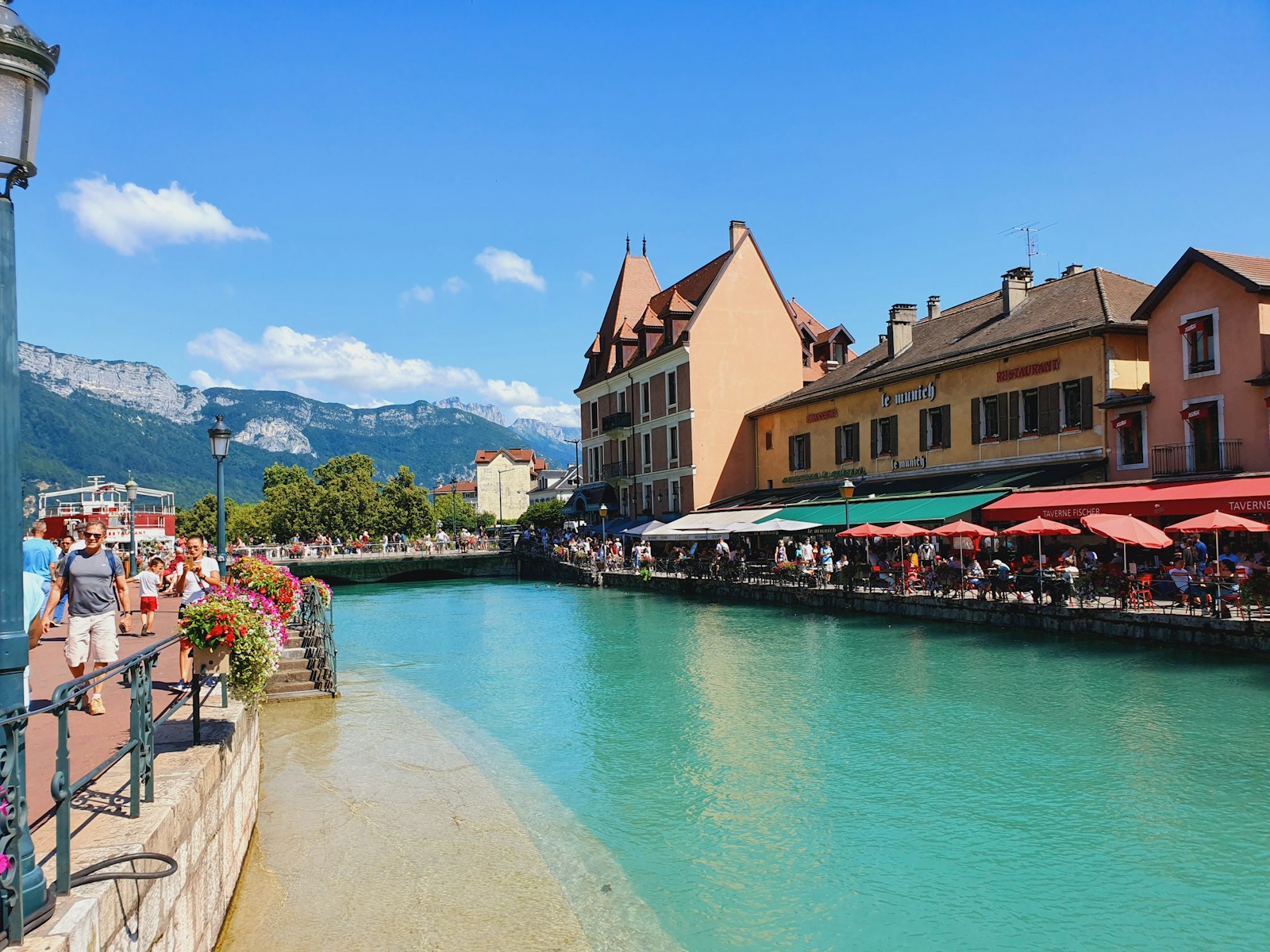
The mechanism is simple and the politics are not. Since the zone tendue designation was extended to most Alpine resort communes, town councils have been free to add a surcharge — anywhere from 5% to 60% — to the taxe d'habitation on furnished second homes. Each spring, the votes land; each summer, the bills follow. This week's prefectural bulletin confirms where owners stand for 2026.
Who voted for the maximum
The pattern that has held for three years hardened further: the communes under the most acute housing pressure went to the ceiling. Chamonix-Mont-Blanc, Megève, Saint-Gervais-les-Bains, Morzine and Les Gets all confirmed the full 60% for a second consecutive year. They were joined this year by Samoëns and Combloux, both of which had previously sat at 40%.
Annecy — where the pressure is urban rather than touristic — held at 50% after a heated council session, resisting calls from the opposition to match the resorts. On the Léman shore, Évian and Thonon remain at 30%.
What it means in euros
The surcharge applies to the taxe d'habitation résidences secondaires, which survives the abolition of the tax on principal homes. For a typical three-bedroom resort apartment with a cadastral rental value around €4,000, the arithmetic looks like this:
| Surcharge | Typical annual bill | Example communes |
|---|---|---|
| None | ≈ €1,350 | Rural communes outside zone tendue |
| 30% | ≈ €1,750 | Évian, Thonon |
| 50% | ≈ €2,000 | Annecy |
| 60% | ≈ €2,150 | Chamonix, Megève, Morzine, Les Gets, Samoëns |
Set against the running costs of an Alpine property, the sums are real but rarely decisive: on a €900,000 chalet, the difference between a 0% and 60% commune is under 0.1% of asset value per year. Owners tell us the sting is less financial than symbolic.
"It reads as a message: we'd rather you rented it out or sold it to a local family."
British owner, Les Gets — bill up €740 this year
Why councils keep voting for it
The councils' case rests on numbers that are hard to argue with. In Morzine, roughly two-thirds of the housing stock is now classed as a second home. Seasonal workers commute from Cluses and beyond; the école has lost two classes in a decade; young locals bid against London money for the same three-bedroom apartments. The surcharge revenue — Chamonix expects around €4m this year — is earmarked, at least rhetorically, for logements saisonniers and first-time-buyer schemes.
Critics reply that the tax has changed little. Resort prices have not fallen; the housing shortage has not eased. What it has done, agents say, is nudge some owners toward classing properties as furnished tourist lets under LMNP status — which brings its own tax treatment and, in some communes, its own registration quotas.
What owners can do
- Check your classification. The surcharge applies to second homes; properties operated as a registered furnished tourist letting with genuine rental activity may be assessed differently. Take advice before restructuring — communes are auditing.
- Verify the cadastral value. Bills are calculated on valeur locative cadastrale, which for older chalets is sometimes badly out of date in the owner's favour — or occasionally against it. Errors can be contested until 31 December.
- Watch the exemption cases. Owners obliged to live elsewhere for professional reasons, or in care, may claim relief — as may properties genuinely unrentable in their current state.
The direction of travel is not in doubt. Two more communes went to the ceiling this year, none came down, and the association of Alpine mayors is lobbying Paris for the right to go beyond 60% in "hyper-tension" zones. Owners should budget on the assumption that the ceiling is not where this ends.
How France got here: a short history of the surcharge
The power to surtax second homes arrived in stages, each one a ratchet. The 2014 ALUR housing law first allowed a 20% majoration in "zones tendues" — communes where housing demand chronically outstrips supply. The 2017 finance law lifted the ceiling to 60% and let councils choose any point between 5% and the maximum. Then a 2023 decree extended the zone tendue designation from 1,140 communes to over 3,600, sweeping in almost every Alpine resort of consequence. The legal framework is set out on the government's service-public.fr guide to the taxe d'habitation on second homes, and the zone tendue status of any commune can be checked against the official register on the state simulator.
Note the asymmetry in the politics: the tax on principal residences was abolished for all households in 2023, which means the résidence secondaire levy is now the only taxe d'habitation left standing — and the only one that can be raised without touching a single voting resident. A commune council faces almost no electoral cost in maxing it: by definition, the people who pay it mostly vote elsewhere.
The fuller picture across the departments
Our survey of deliberations published in the prefectural bulletins gives the following picture across the paper's territory. Figures are the surcharge rate applied to the second-home taxe d'habitation for 2026:
| Commune | Department | 2025 | 2026 |
|---|---|---|---|
| Chamonix-Mont-Blanc | Haute-Savoie | 60% | 60% |
| Megève | Haute-Savoie | 60% | 60% |
| Saint-Gervais-les-Bains | Haute-Savoie | 60% | 60% |
| Morzine | Haute-Savoie | 60% | 60% |
| Les Gets | Haute-Savoie | 60% | 60% |
| Samoëns | Haute-Savoie | 40% | 60% |
| Combloux | Haute-Savoie | 40% | 60% |
| La Clusaz | Haute-Savoie | 40% | 40% |
| Le Grand-Bornand | Haute-Savoie | 40% | 40% |
| Annecy | Haute-Savoie | 50% | 50% |
| Val d'Isère | Savoie | 60% | 60% |
| Courchevel (St-Bon-Tarentaise) | Savoie | 40% | 60% |
| Bourg-Saint-Maurice / Les Arcs | Savoie | 40% | 40% |
| Alpe d'Huez (Huez) | Isère | 20% | 40% |
| Les Deux Alpes | Isère | 20% | 40% |
The Savoie and Isère resorts, which lagged Haute-Savoie by two or three years, are now converging on the same ceiling — Courchevel's move to 60% this year being the clearest signal that even the highest-end markets no longer consider the tax reputationally risky.
The comparison owners raise: Switzerland
British and Dutch owners at our reader events keep raising the same comparison, and it is worth taking seriously. Switzerland does not surtax second homes — it caps them. The 2012 "Lex Weber" initiative, in force since 2016, prohibits new second-home construction in any commune where second homes already exceed 20% of stock, which covers virtually every Valais and Vaud resort. The result is a supply freeze rather than a tax: existing Swiss second homes carry scarcity value, and prices in Verbier and Zermatt have outpaced their French neighbours since. France chose the tax; Switzerland chose the wall. Owners can debate which is worse, but only one of them appears on your avis d'imposition each November — which you can consult in your personal space at impots.gouv.fr.
Reading your bill, line by line
The November avis breaks the bill into commune, intercommunalité and special levies. The surcharge appears as "majoration résidence secondaire" on the commune line only — the intercommunal share is not majorated. Three practical checks: that the property is not misclassified as vacant (the taxe sur les logements vacants is a different and worse regime); that the valeur locative reflects reality after any works; and that you have declared occupancy status in the "Gérer mes biens immobiliers" service on impots.gouv.fr, mandatory since 2023 — undeclared properties are assessed by assumption, rarely in the owner's favour. Errors are contested through the messagerie in your espace particulier, with a deadline of 31 December of the year following the bill.
What comes next: the 100% debate
The Association nationale des élus de la montagne — the mountain mayors' lobby — formally asked the government last autumn for the right to exceed the 60% ceiling in communes where second homes pass half the housing stock, floating 100% as the new maximum. The finance ministry has so far declined, citing constitutional-equality risk, but the direction of pressure is unambiguous, and second-home owners should assume the question returns with every budget cycle. Two adjacent levers are also in play: several resorts now use their urban-planning codes to cap the conversion of permanent housing to tourist lets (a Saint-Malo-style quota system upheld by the courts in 2024), and the wealth tax on property, the IFI, catches Alpine portfolios above €1.3m of net taxable property — the thresholds and rules are laid out on impots.gouv.fr.
For an owner weighing exit, the capital-gains clock matters more than the surtax: French plus-value tax on second homes tapers to zero only after 22 years of ownership (30 for the social levies). A 2016 buyer contemplating sale because of a €740 surcharge would hand the treasury tens of thousands in gains tax to avoid it — the arithmetic almost never favours a tax-motivated sale. The steadier responses remain the ones above: correct classification, accurate valuation, and — for those with genuine rental activity — the furnished-letting regimes, taken with proper advice.
Related: where the surcharge money is supposed to go — the seasonal housing crunch, and the 90/180 rule for the owners paying it.
[Preview edition — this article is illustrative while Issue No. 1 is in preparation.]
Advertisement
Partner · Property
Domosno
New-build and resale ski property across the French Alps. English-speaking, VAT-reclaim specialists.
View listings