Mountain life · The two-wheel trade
The two-wheel economy: how mountain biking became Chamonix's largest summer business
More riders arrive in the Chamonix valley in July than climbers, hikers or paragliders — and the bike shops that once felt like a winter-trade afterthought are now year-round operations with six-week service queues. The mountain bike is reshaping the summer Alps.
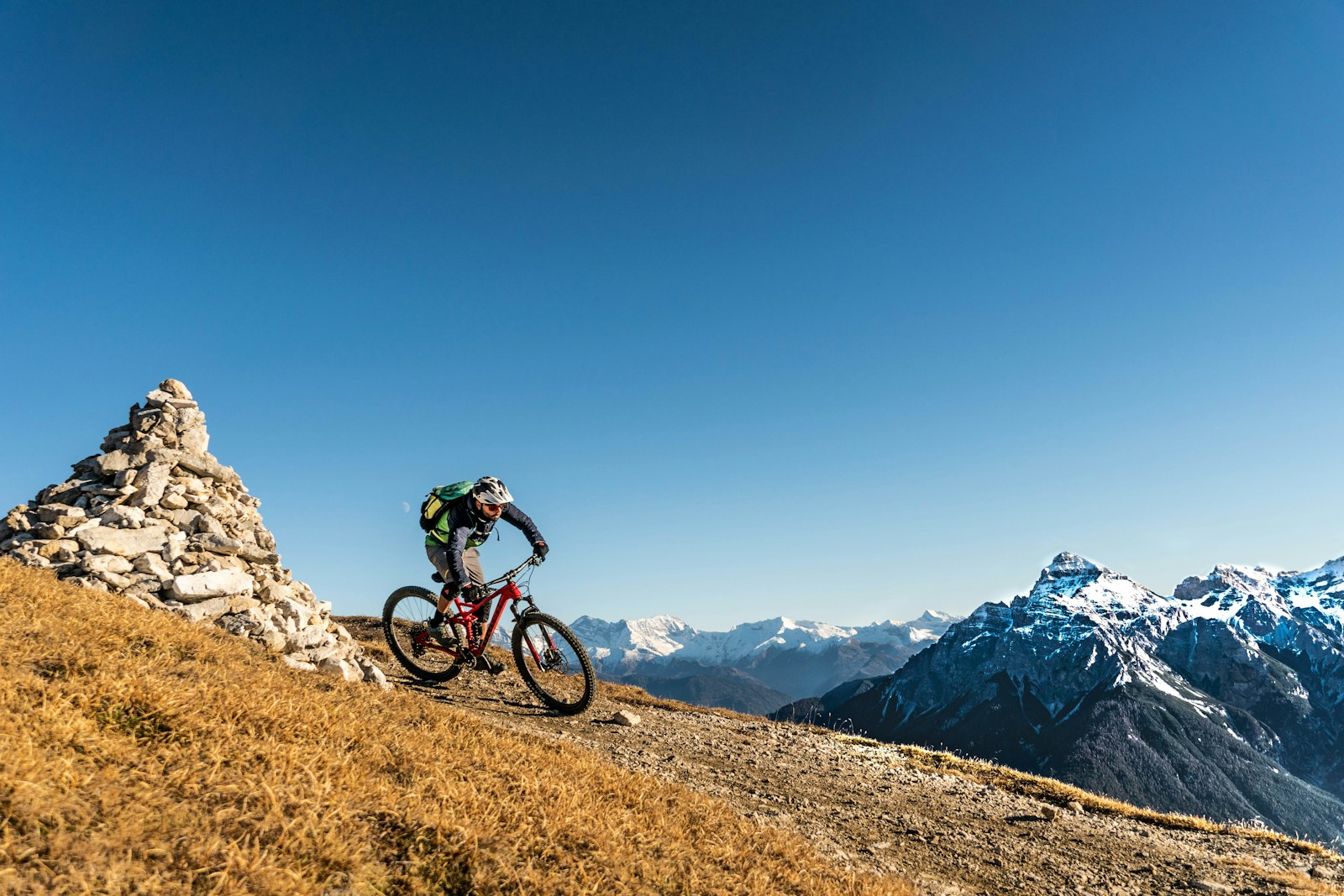
The numbers crept up on everybody. For most of Chamonix's commercial history, summer meant two things: the mountain and the glacier. Climbers and hikers arrived; the valley fed and housed them. Mountain biking was a niche, then a sub-season, then — with the conversion of the Planpraz lift to bike-carrying operation in 2019 — a business. In 2026, it is the business. The valley's tourism office records more summer bike entries than entries in any other activity category, and it is not close.
The trail network
The Chamonix valley trail network now covers approximately 450 km of marked routes, from flowy beginner loops accessible from the valley floor to the technical descents from Aiguille Rouge and the Flégère plateau that appear on riders' wish lists alongside Whistler and the Dolomites. The bike parks at Les Houches and Chamonix have combined capacity of around 2,200 riders per day with lifts running; the actual peak throughput in a good July regularly exceeds that, which is why Saturday-morning queues at the Les Houches base now pattern on February ski weekends.
| Activity | Summer 2019 visitor days | Summer 2025 visitor days | Change |
|---|---|---|---|
| Mountain biking | ≈ 85,000 | ≈ 220,000 | +159% |
| Guided climbing | ≈ 60,000 | ≈ 58,000 | -3% |
| Paragliding | ≈ 18,000 | ≈ 22,000 | +22% |
| Hiker trail passes (Planpraz+Flégère) | ≈ 210,000 | ≈ 195,000 | -7% |
Two trends read clearly from those figures. Biking grew faster than any other single activity over six years. And traditional hiking — the valley's historical summer base — has quietly softened, partly displaced by bikers who use the same lifts and some of the same paths, partly by longer summer seasons that make the early and late shoulder weeks more attractive and spread the hiker footprint beyond June–August peak.
The bike shop economy
The visible sign of the shift is the retail strip. Chamonix's centre, which in 2015 had three specialist mountain bike shops, now has nine, with a tenth opening on the Argentière road this summer. Service queues — the proxy for an activity's actual penetration versus aspirational tourism — run at four to six weeks in July, which means riders who arrive without a pre-booked service slot are riding on whatever happened at last season's tune-up. The quality brands — Trek, Specialized, Santa Cruz — opened concept stores or partnerships with Chamonix-based dealers starting in 2022; YT, Canyon and Pivot followed. Margins on high-end bikes are thin; margins on rentals and guiding are better; the shop that makes money in 2026 runs a rental fleet, a guide programme and a service department, and treats bike sales as acquisition cost for a recurring customer.
"Two summers ago I waited six weeks to get my fork serviced. I came back this year with a new bike and still waited four. That is not a problem — that is demand the valley hasn't finished building capacity for yet."
Rider from Lyon, third summer visit to Chamonix
The property angle
Where demand grows, property follows — but at a lag, and in specific locations. The Chamonix property market is overwhelmingly priced around winter access: ski-in/ski-out, walking distance to the Aiguille du Midi cable car, proximity to the town centre's après-ski. Summer bikers have a different map: they want proximity to the bike park base at Les Houches, or to the Chamonix town lift stations that carry bikes, or to the van-park culture of the Argentière end of the valley where the more technical trails concentrate.
Les Houches, long the "affordable" end of the valley — younger buildings, lower prices, less convenient for the winter lifts — has the most interesting trajectory. Its bike park base station is a ten-minute walk from the village; its winter ski areas are connected to Chamonix by a bus that locals use without complaint. A Les Houches apartment priced at €7,000–9,000 per square metre that was once marketed principally as a cheaper Chamonix alternative is now marketed by the more perceptive agencies as a dual-season property with a summer profile that genuinely differs from its expensive neighbour. Whether the price gap closes depends on whether summer bikers become year-round owners — and the evidence from the first cohort who bought in Les Houches for the trails, not the skiing, suggests the answer is yes.
The cloud: trail erosion and governance
A trail network at 450 km and 220,000 annual rider-days is at the point where the governance of the resource becomes expensive and contested. Erosion on the more popular descents is visible and accelerating. The ONF (national forestry office) closed two sections of the Planpraz descent temporarily in 2025 after wet-season damage; the political pressure to reopen them arrived by the following morning. The cost of maintenance — trail shaping, drainage work, signage — is currently split between the Compagnie du Mont-Blanc, the mairie, the ONF and the bike brands that use the network for their athlete programmes. The split is informal and slightly adversarial, and every stakeholder agrees, privately, that it is not sustainable at current visitor volumes. A dedicated trail levy — the kind that Colorado ski areas imposed as their bike parks scaled — is under discussion and will arrive in some form before the 2028 season. Riders should expect it. Property buyers should price in a more managed, and eventually more protected, trail network — the alternative, in a valley under this much pressure, is degradation, not freedom.
The trail network governance question
A trail system at 450 km and 220,000 annual rider-days is expensive to maintain, and the current funding model — a patchwork of Compagnie du Mont-Blanc investment, ONF management, mairie budgets and brand partnership — is, by common consent, not structured for the next decade. The comparison that the mairie's outdoor commission keeps returning to is Whistler Blackcomb in British Columbia, where a dedicated trail levy on lift tickets has funded the construction and maintenance of 80+ km of dedicated bike-park trails since 2010. The levy generates approximately CAD $2m annually. A comparable levy in Chamonix, at €3–5 per bike lift access, would generate an estimated €600,000–800,000 per season at current volumes.
| Resort | Model | Trail kms | Funding mechanism |
|---|---|---|---|
| Whistler, BC | Bike park + trail levy | ≈ 80 km bike park | Lift-ticket levy + Bike Park Wales model |
| Morzine–Les Gets | Portes du Soleil bike pass | ≈ 650 km marked | Seasonal bike pass + sponsor contribution |
| Chamonix valley | Integrated with summer lift pass | ≈ 450 km marked | No dedicated levy currently |
| Les 2 Alpes | Dedicated bike park pass | ≈ 35 km bike park | Separate bike park ticket |
The Portes du Soleil model — a seasonal bike pass that includes lift access across Morzine, Les Gets, Châtel and the Swiss side — is the closest Alpine analogue. Its dedicated funding stream allowed the consortium to invest in trail shaping, drainage and signage at a pace that Chamonix's more informal model has not matched. The valley's trail clubs — the collective of volunteer associations that maintains roughly 200 km of the non-bike-park network — describe a situation where volunteer capacity has been overtaken by visitor volume. The gap is real, the solution obvious, and the implementation slow. This is routine for Alpine resort governance, which moves on consensus.
The bike industry's relationship with the valley
For the major brands, Chamonix functions as both a laboratory and a showroom. Santa Cruz, YT and Specialized all run athlete programmes from Chamonix bases; the valley's trail mix — from beginner-accessible flow trails to the Verte des Houches, which has featured in multiple major online riding videos — is a content-production asset as much as a playground. The commercial structure is typically a partnership with a local dealer, a retail rebate on bikes for the athlete team, and naming rights on specific trails or trail days. For the valley's economy, this means a baseline of professional riders year-round, a media presence that functions as organic marketing for the resort's summer offer, and a steady pipeline of motivated riders who follow athlete content.
The downside — one that Chamonix's tourism office acknowledges privately — is that the content-driven trail promotion creates demand spikes on specific trails that are not distributed across the network. When a major riding video features the same descent, that descent receives disproportionate traffic in the following two summers; the ONF has recorded this pattern clearly. Governance of trail promotion is, in practice, very difficult: the valley cannot tell a global brand which trails to feature. But trail management can respond by investing in the highlighted trails' capacity before the video lands, rather than after. That requires the advance communication from the brands that the current relationship structure does not routinely provide.
Property near the bike park: a micro-market
Les Houches, at the valley's western end, deserves a closer look than the Chamonix agency mainstream typically gives it. Its bike park base is the busiest single-entry point in the valley for summer riders; its winter lift connection to Chamonix via the Bellevue gondola is reliable and free on ski passes; and its housing stock — built mainly in the 1970s–1990s — transacts at €6,000–10,000 per square metre, a 30–40% discount to equivalent Chamonix centre stock. The summer biking profile is driving a modest but distinct revaluation: properties near the bike park base or with easy trail access are moving faster than comparable valley-floor apartments in the broader market. It is a premium measured in days-on-market and in the profile of buyer rather than in headline price — the signal stage, before the price signal, in any micro-market transition.
Related: the housing problem for the people who run the bike parks and guide the trails, and what happens when summer crowds exceed their equipment's capability.
[Preview edition — this article is illustrative while Issue No. 1 is in preparation.]
Advertisement
Partner · Property
Domosno
New-build and resale ski property across the French Alps. English-speaking, VAT-reclaim specialists.
View listings