Mountains · Safety
PGHM rescue logs, June: what actually goes wrong above 2,500 metres
We read a month of Chamonix gendarmerie rescue reports so you don't have to. The lessons are unglamorous, repetitive, and could be printed on a boot box. Mostly: footwear.
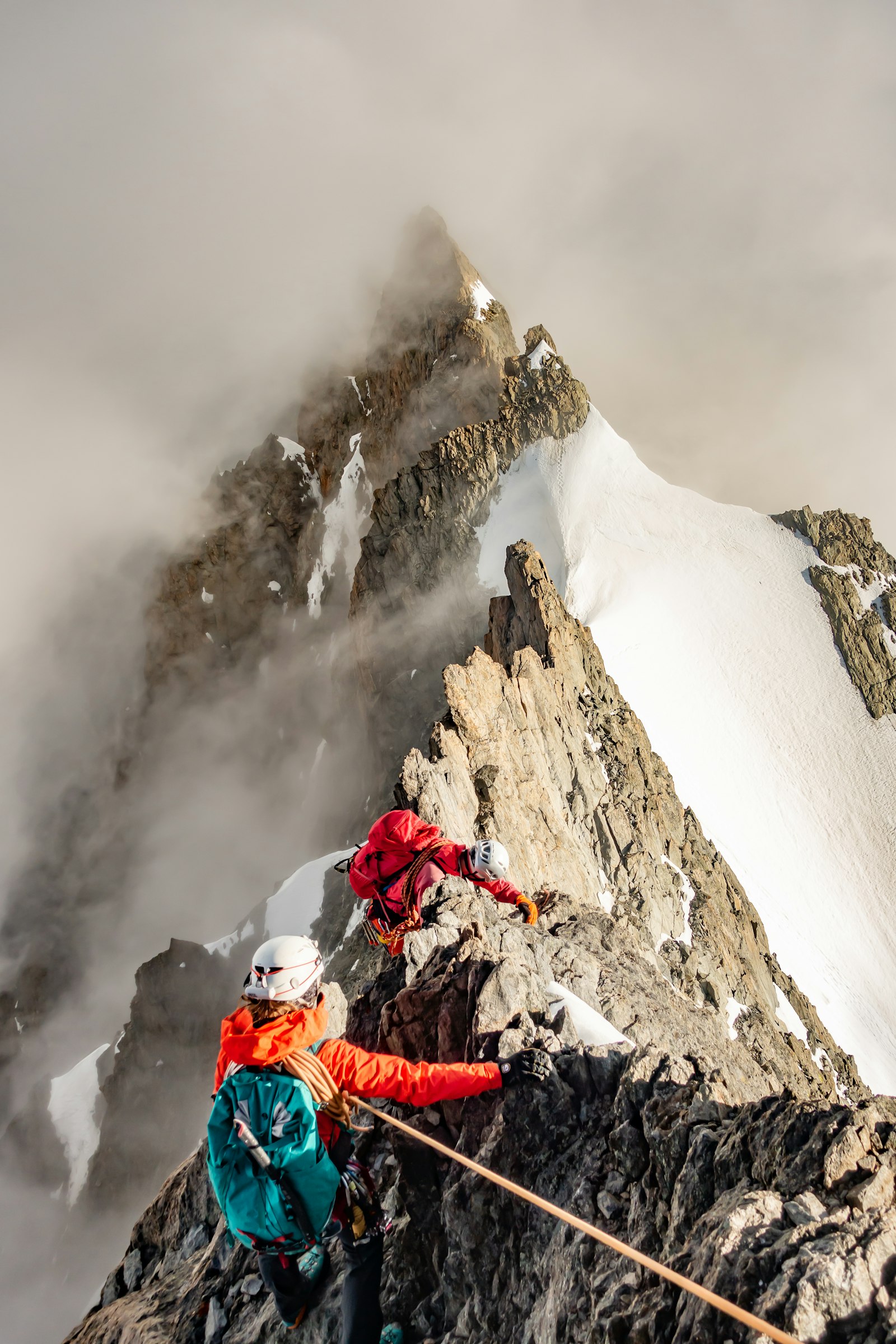
The Peloton de Gendarmerie de Haute Montagne publishes no drama. Its interventions are logged in the flattest prose in France — "hiker, unhurt, unable to continue" — and it is precisely this flatness that makes a month of reports worth reading. June, on the Chamonix side of the massif: 87 interventions. Here is what they actually were.
The breakdown
| Category | Share of callouts | Typical case |
|---|---|---|
| Hikers exhausted or benighted | ≈ 40% | Underestimated route, no headtorch, phone at 4% |
| Slips on snow patches | ≈ 20% | Trail shoes on June névé, ankle or wrist |
| Genuine alpine accidents | ≈ 15% | Rockfall, crevasse, roped falls on classic routes |
| Medical events | ≈ 15% | Cardiac, altitude, heat — often on easy ground |
| Paraglider & other | ≈ 10% | Landing injuries, unhurt retrievals |
The proportions barely move year to year. The June specifics are two: snow, and optimism. Early-summer hikers meet old winter snow exactly where the classic itineraries cross north-facing slopes — and June optimism means they meet it at 5 p.m., tired, in trail shoes, with the freeze arriving.
What the logs keep repeating
- Footwear, footwear, footwear. The single most common contributing factor in June injuries is inadequate shoes on residual snow. A €30 pair of microspikes would erase a fifth of the month's log.
- The 4 p.m. problem. A majority of "unable to continue" calls come from parties who were still ascending after mid-afternoon. The mountains did not surprise them; the clock did.
- Phones as plans. The PGHM is unfailingly polite about this. The logs are less so: "no map, no torch, following a GPS trace recorded in August."
- Easy ground bites. The month's two most serious medical evacuations happened below 2,000 metres, on paths rated for families. Fitness, heat and altitude do not read difficulty grades.
"We rescue very few reckless people. We rescue ordinary people who were forty-five minutes more ambitious than their equipment."
PGHM officer, Chamonix, speaking generally
What it costs — and who pays
Mountain rescue in France is free at the point of need, helicopter included — a public service the PGHM guards with pride. The exceptions are on-piste skiing (billed via the resorts in winter) and, increasingly, discussions about egregious negligence. Insurance still matters: the rescue is free, but the ambulance from the valley hospital, the treatment, and the repatriation are not. Owners hosting summer guests should say this plainly: check your cards' mountain-activity clauses before, not after.
The reader's checklist for the high season
- Microspikes in the pack until mid-July on anything north-facing above 2,200 m.
- Turnaround time decided at breakfast, kept like a train departure.
- Headtorch, map, and a phone battery treated as emergency kit, not entertainment.
- The PGHM direct line — 04 50 53 16 89 — saved in every guest's phone, with 112 as the European default.
The massif's June log ends as it began: with a party walked down in the dark, unhurt, slightly embarrassed, and — the log notes with the nearest thing to warmth in gendarmerie prose — "grateful." Be the reader who never features in it.
Three Junes, compared
One month is an anecdote; three are the start of a dataset. Setting this June's log against the two previous:
| June | Interventions | Fatalities | Dominant factor |
|---|---|---|---|
| 2024 | 71 | 3 | Late, heavy snowpack — alpine falls |
| 2025 | 94 | 5 | Early heatwave — exhaustion & medical |
| 2026 | 87 | 2 | Residual snow on approaches — slips |
The volume trend is upward over any longer window — the massif's June visitor numbers have grown every post-pandemic year — but the composition swings with the snowpack. A late-melting year exports winter's hazards into July; an early-melting year invites trail-shoe traffic to altitude in May. Watch the snowline in the Météo-France mountain bulletins (meteofrance.com/meteo-montagne) and you can predict the shape of the month's log before it is written.
The machine behind the rescue
The PGHM Chamonix is one of about twenty specialised mountain-gendarmerie units nationally (the force's mountain organisation is described at gendarmerie.interieur.gouv.fr), and the Mont Blanc posting is its most exposed: some 1,400–1,600 interventions a year, two-thirds of them between June and September. The June flying is shared between the gendarmerie's EC145 and the sécurité civile's Dragon 74; a flight-hour is commonly costed around €3,500–4,500, and a routine two-victim extraction consumes about one. Multiply across the summer and the free-at-point-of-need principle costs the state several million euros a season on this massif alone — a figure raised annually in parliament, and so far defended successfully on the argument that hesitation kills: people who fear a bill call at nightfall instead of mid-afternoon, and nightfall calls are the expensive ones.
Insurance, in detail rather than in passing
The rescue is free; nothing after the helicopter pad is. A June ankle that becomes an ambulance, surgery in Sallanches, ten physio sessions and an early flight home runs €4,000–8,000 for an uninsured EU visitor and multiples of that with repatriation. The layers, from cheapest up:
- EHIC/GHIC or EU coverage handles French state healthcare co-payments, not repatriation, not private clinics.
- Activity cards. A club membership from the French alpine club FFCAM (≈ €100/yr with its insurance option) or an FFME licence covers search, rescue and repatriation for mountain sports, worldwide in the FFCAM's case — the best value in the sport.
- Travel policies vary wildly on the clauses that matter: altitude ceilings (commonly 3,000 m — the Gôuter route exceeds it), "mountaineering with ropes" exclusions, and off-piste definitions. Read the exclusion list before the trip, not in the pharmacy.
- Owners hosting guests should treat this as house policy: a laminated card by the door with 112, the PGHM direct line, and "check your insurance covers above 3,000 m" has genuine protective value — see our VLS-T insurance notes for the visa-linked requirements.
What the professionals do differently
Interview guides and PGHM officers about their own habits and the same unglamorous list recurs. They check the bulletin the evening before and again at dawn, because mountain forecasts are written twice a day for a reason. They set turnaround times against the day's freezing level, not against ambition. They carry microspikes to July because 200 grams weighs less than a helicopter. They tell someone their route — the refuges' overnight books exist partly for this — and they treat the phone as a torch of last resort, carrying a real one. None of it photographs well, which is rather the point. The mountains of the massif are not trying to kill anyone in June; they are simply indifferent to schedules, and the log is a monthly census of people who negotiated with an entity that does not negotiate.
Reading a mountain forecast like a local
The single highest-leverage skill a summer visitor can acquire costs nothing and takes ten minutes a day. The Météo-France mountain bulletin (meteofrance.com/meteo-montagne, massif by massif) is written by forecasters who assume you will make decisions with it, and three of its lines matter more than the pretty symbols. The iso 0°C — the freezing altitude — tells you what last night did to the snow patches and wet rock on your route: an iso at 3,800 m means yesterday's slush is this morning's verglas nowhere, but an iso at 2,600 m after a clear night means the couloir crossing on your "easy" balcony trail is a skating rink until ten. The storm timing ("risque d'orage à partir de 14h") is a departure time in disguise: Alpine convection runs on an afternoon clock, and the classic accident is not being struck by lightning but being benighted by the detour the storm forced. And the wind at altitude decides the lifts: sustained 60 km/h closes the cable cars that your descent plan quietly depended on — a mechanism that will matter more during the Planpraz works, when alternatives are fewer.
The locals' second habit is checking conditions reports, not just forecasts: refuge guardians post live route conditions, and the valley's guiding companies publish what they actually encountered yesterday. Ten minutes with both, the evening before, converts most of the log's "unable to continue" entries into an ordinary day out. That — more than any equipment purchase — is the difference between reading about the PGHM and meeting them.
Related: the lift works that will reroute summer crowds through 2028.
[Preview edition — this article is illustrative while Issue No. 1 is in preparation.]
Advertisement
Partner · Property
Domosno
New-build and resale ski property across the French Alps. English-speaking, VAT-reclaim specialists.
View listings