Property · Market intelligence
The ninety-minute city: how the Geneva commute is repricing Annecy's lakefront
A cross-border rail line and a tax treaty most buyers have never read are quietly turning France's prettiest lake into Geneva's most desirable suburb. Annecy's agents have never seen a market like it.
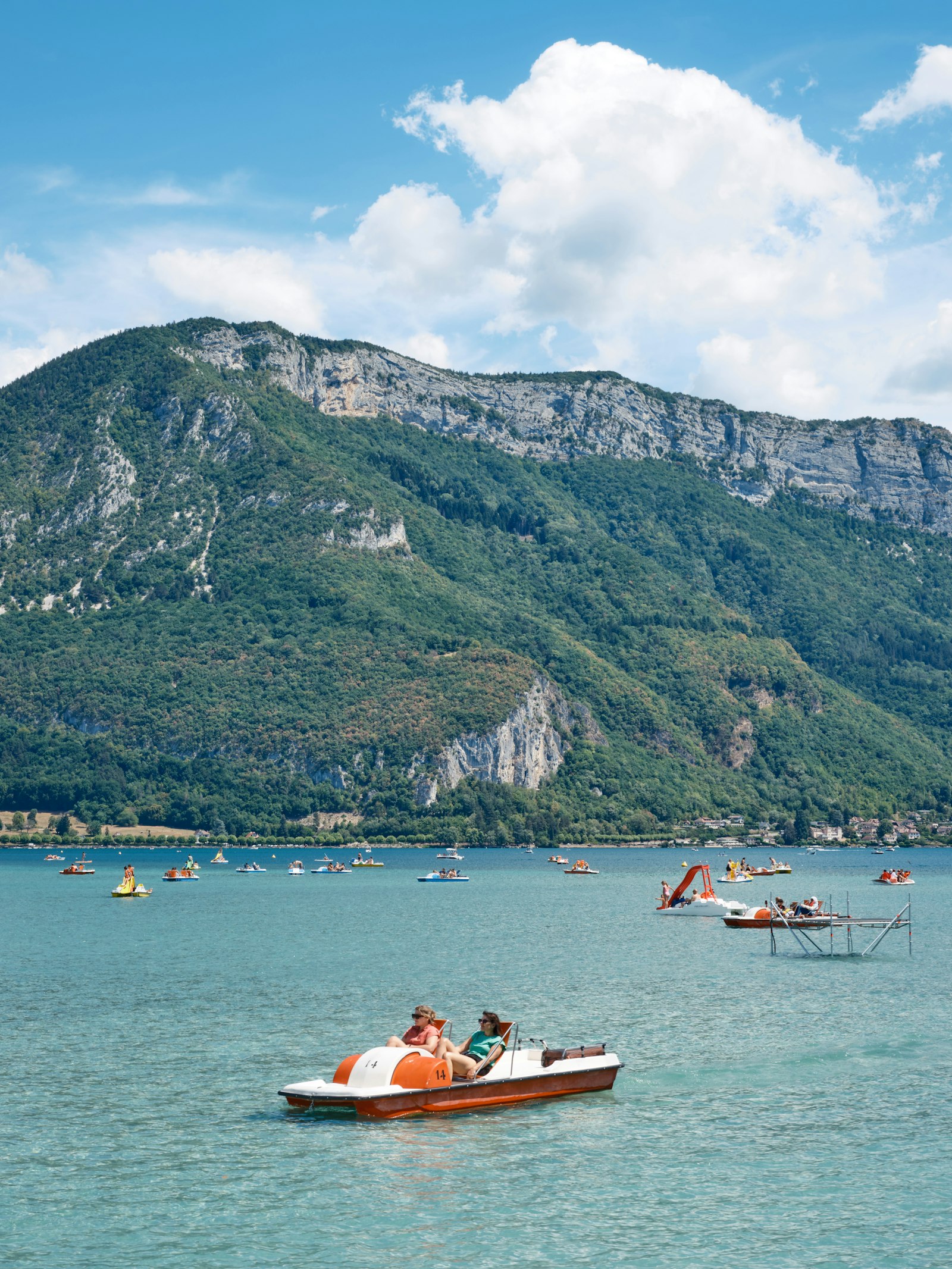
Annecy has always sold itself on the lake — the cleanest large lake in Europe, a medieval old town wrapped around canals, the Alps rising directly from the water. What has changed is who is buying the view. Five years ago the typical lakefront purchaser was a French retiree from Lyon or a second-home owner from Paris. Today, agents estimate that cross-border Geneva commuters and remote-working professionals with a Geneva-based employer account for a third or more of transactions above €800,000 — and the share is rising every quarter.
What the Léman Express changed
The Léman Express, the cross-border rail network linking Geneva to the surrounding French and Swiss towns, does not run directly into Annecy — the town sits roughly 40km south of Geneva by road, outside the network's core lines. What it changed is the wider commuting culture: the normalisation of a Geneva-area workforce that lives in France and crosses the border daily or several times a week. Annecy, connected to Geneva by a motorway that runs in well under an hour outside peak periods, and by a mainline rail connection into Geneva-Cornavin, has become the upmarket end of that commuting belt — the town frontalier workers choose when they can afford to choose, rather than the town they settle for.
The price map
| Zone | Character | Typical €/m² |
|---|---|---|
| Vieille ville & lakefront quai | Historic centre, canal or lake views | €10,000–14,000 |
| Impérial / Bout-du-Lac | Belle-époque apartments, walking distance to lake | €8,000–11,000 |
| Annecy-le-Vieux | Preferred by families, good schools, lake access | €6,500–9,000 |
| Cran-Gevrier / Meythet | Practical, motorway access, better value | €4,500–6,000 |
| Talloires & the east shore | Prestige villages, direct lake frontage | €12,000–20,000+ |
The prestige-village premium at Talloires and Menthon-Saint-Bernard has always existed — this is where French industrial dynasties have holidayed for a century. What is new is the pace at which the "practical" zones are converging on the historic centre's pricing. Cran-Gevrier, unglamorous and motorway-adjacent, has appreciated faster over the past three years than the old town itself, precisely because commuters value the A41 access to Geneva over canal views.
The tax arithmetic that makes it work
The frontalier arrangement is the quiet engine behind the whole market, and few British or American buyers understand it before their first Annecy viewing. Under the Franco-Swiss tax agreement, a French resident who works in Geneva canton is taxed at source in Switzerland on employment income, with France granting a corresponding credit — the net effect is a take-home income that reflects Swiss salary levels while the worker's cost of living, housing and property tax run at French rates. A software engineer or private-bank analyst earning a Geneva salary while paying Annecy prices for housing has, in relative terms, more disposable income than an equivalent professional living in Geneva itself, where rents and purchase prices are dramatically higher. That gap is what is being capitalised into Annecy property prices.
"My Swiss salary, my French mortgage, my lake view. Every Genevois colleague who visits asks the same question: why didn't I do this ten years ago?"
Geneva-based finance professional, bought in Annecy-le-Vieux, 2025
Who is not buying, and why it matters
The commuter-driven repricing has a visible casualty: young Annecy natives and dual-income local households priced out of the centre entirely, a dynamic the town's housing office has flagged as the fastest-moving affordability crisis in Haute-Savoie outside the resort communes. Annecy's own second-home surtax — discussed in our commune-by-commune survey — sits at 50%, deliberately below the resort ceiling of 60%, a signal that the mairie is trying to slow speculative second-home demand without discouraging the year-round frontalier households it also wants. Whether that distinction holds in practice is contested locally; a property let occasionally on Airbnb between a commuting owner's Geneva trips can look, on paper, very like a second home.
What buyers should check
- Actual commute time, not map distance. The A41 to Geneva is excellent outside peak hours and genuinely congested inside them; a viewing at 11 a.m. tells you nothing about a 7:45 a.m. departure.
- Frontalier status is not automatic. It depends on your employer's canton, your contract type, and bilateral agreements that have shifted before and could shift again — take current advice, not forum wisdom.
- Lake frontage is legally distinct from lake view. Direct frontage carries navigation and construction restrictions (the loi Littoral-style protections that apply to France's large lakes) that a "lake view" property two streets back does not.
- Winter humidity. Lakefront apartments in the old town, many in centuries-old stone buildings, need genuine damp-proofing diligence — ask for the diagnostics, not just the view.
Annecy's lake was never going to need a rail line to sell itself. What the Geneva commuting economy has done is give the lake a second buyer beyond the lifestyle purchaser — a professional one, salaried in francs, paying in euros, and running the arithmetic every serious agent in town now has memorised.
The frontalier arrangement, explained properly
The Franco-Swiss tax agreement governing cross-border workers is older than the Léman Express and considerably more consequential for the Annecy market than the railway itself. Under the bilateral accord, a French-resident worker employed in Geneva canton is subject to source taxation in Switzerland — deducted directly from salary — with France granting a corresponding tax credit under the double-taxation treaty so the same income is not taxed twice. The practical result: net take-home pay reflects Geneva's considerably higher wage levels, while the worker's housing, property tax and daily cost of living are incurred in France at French rates. The official framework is set out by the French tax administration's international pages and, from the Swiss side, by the canton of Geneva's own guidance for frontaliers.
Genevan cantonal politics periodically debates tightening this arrangement — French frontaliers are a recurring subject in Swiss cantonal elections, framed by some local politicians as wage competition for Swiss-resident workers — but the treaty has proven durable through several political cycles, and no serious near-term change is currently before either government. Buyers relying on the arrangement for their long-term affordability maths should nonetheless treat it as a favourable but not immutable feature of the market, in the same category as any cross-border tax treaty.
The price data in context
| Market | Typical apartment €/m² | Comparable frontalier salary context |
|---|---|---|
| Central Geneva | CHF 14,000–20,000 (≈ €14,500–20,700) | — |
| Annecy old town / lakefront | €10,000–14,000 | 30–45% discount to Geneva, same commute band |
| Annemasse (rail-connected) | €6,500–8,500 | Larger discount, shorter commute via Léman Express |
| Thonon-les-Bains | €5,500–7,500 | Lakeside alternative, longer commute |
Set against Geneva's own extraordinary price levels — among the highest in Europe — even Annecy's steepening lakefront prices represent a substantial discount for a commute that, outside peak congestion, is genuinely comparable to many intra-city commutes within Geneva itself. This arbitrage is the single clearest driver of the market's direction, more consequential than any tourism or lifestyle factor this newspaper more commonly covers.
The Genevois politics worth watching
Swiss cantonal debate over frontalier workers tends to resurface around two issues: pressure on Geneva's own housing and wage market from workers who could, in principle, compete for Swiss-side jobs at Swiss-side cost of living but choose the cross-border arrangement instead, and periodic proposals — so far unsuccessful — to renegotiate the tax-sharing formula between France and the canton. The current formula returns a share of the tax revenue collected on frontalier income to the French communes and department that provide these workers' public services (schools, roads, healthcare infrastructure), a compensation mechanism Haute-Savoie's local authorities have lobbied to increase given the population growth the frontalier economy has driven. Buyers with a long time horizon should treat this compensation-formula debate, not the headline tax treaty, as the more likely source of future adjustment — a change to the redistribution share affects departmental infrastructure spending, not an individual worker's take-home pay.
Related: the rail network reshaping which towns capture this commuter demand, and the Annecy second-home surtax rate set deliberately below the resort ceiling.
[Preview edition — this article is illustrative while Issue No. 1 is in preparation.]
Advertisement
Partner · Property
Domosno
New-build and resale ski property across the French Alps. English-speaking, VAT-reclaim specialists.
View listings