Community · Morzine
English-speaking parents outnumber French at one Morzine école — the mairie responds
A bilingual classroom pilot begins in September after enrolment figures crossed a threshold nobody had planned for. Not everyone in the valley is pleased — and the argument is about much more than language.
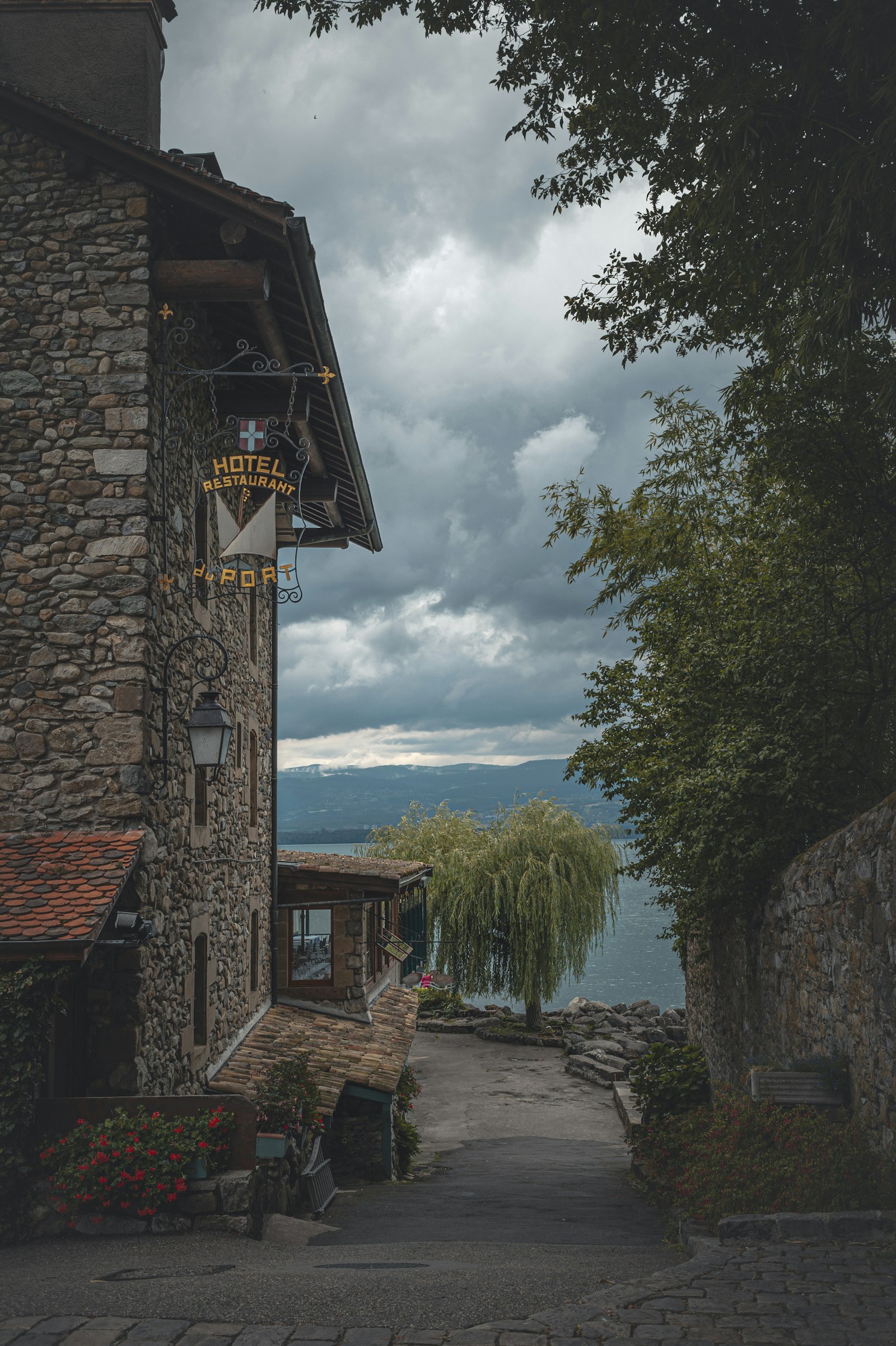
The moment arrived without ceremony, in an enrolment spreadsheet. When the rentrée lists were drawn up this spring for one of Morzine's primary classes, families whose home language is English outnumbered francophone households for the first time — 14 of 26 pupils. The mairie had seen it coming for years. What it did next is the interesting part.
The pilot
From September, the school will run a bilingual classroom pilot for the middle primary years: mornings taught in French by the titulaire, three afternoons a week taught in English by a qualified anglophone assistant, with the academy inspectorate's blessing and a two-year review clause. It is a model borrowed, with adaptations, from the international sections of Chamonix — which have run, mostly peacefully, for decades.
The mairie's framing is deliberately unsentimental: this is retention policy, not multiculturalism. Year-round anglophone families — ski-industry entrepreneurs, remote workers, guides married into the valley — are precisely the demographic that keeps a resort school open in a commune where two-thirds of the housing is second homes. Lose them to home-schooling or to the international schools of Geneva, and the school loses classes; lose classes, and the village loses families of every language.
"An empty chalet pays a surtax. A full classroom pays for itself."
Adjoint au maire, Morzine, presenting the pilot
The objections
They are real, and not all of them are the ones you would guess. Some francophone parents worry the pilot formalises a parallel community — that children who could have been forced together by a shared playground language will now be politely separated by timetable. A retired teacher wrote to the bulletin municipal asking why the commune celebrates an anglophone majority in a class as policy success rather than integration failure.
Anglophone parents, for their part, are not unanimous either. A vocal group moved to the valley precisely so their children would be schooled in French; several told the consultation they would opt out of the English afternoons if allowed. The mairie's answer: participation is by family choice, and the pilot's success will be measured on French outcomes first.
The numbers underneath
- Morzine's permanent population has been roughly stable for a decade — but its composition has shifted: fewer young Savoyard families (housing costs), more year-round international households.
- The school has lost two classes since 2015. The pilot class is, bluntly, an attempt to stop the third.
- Chamonix's international sections, the local precedent, now have waiting lists in both linguistic directions — French families want the English track too.
Why it matters beyond one classroom
Every dual-season resort in this newspaper's territory is running the same experiment with different courage: how to convert second-home money and international residents into a village that still functions in November. Schools are where the answer becomes visible. A commune that keeps its école keeps its young families, its ski-bus timetable, its boulangerie hours — the whole apparatus that property listings call "authentic village life" and price accordingly. Morzine has decided that apparatus is worth teaching in two languages. The valley will spend two years finding out if it was right.
How the French system actually accommodates two languages
France schools by national curriculum, but it has long-standing structures for bilingual education, and knowing their names helps parents navigate. The gold standard is the section internationale — a ministry-approved stream teaching part of the week in the partner language with native-speaker teachers, examined ultimately through the brevet and bac's international options. Chamonix's primary and collège sections, created for precisely the demographic now reshaping Morzine, are the local model. One rung down sits the kind of pilot Morzine has adopted: an enhanced-language classroom under the academy's discretion, lighter to approve, easier to unwind. The national framework for both is described on the education ministry's site, education.gouv.fr, and enrolment mechanics for any child arriving from abroad are set out on service-public.fr.
The practical point for incoming families: enrolment runs through the mairie, not the school. Proof of address, vaccination record, and — for a child arriving mid-pathway — an assessment that usually places by age, not by anglophone reading level. Children under six adapt with almost insulting speed; arrivals at nine or ten are the cases where the new pilot's structured support earns its budget.
The demographics underneath, in numbers
| Measure | Morzine (approx.) |
|---|---|
| Permanent population | ≈ 2,700 (from ≈ 3,000 a decade ago) |
| Second homes, share of dwellings | ≈ 74% |
| Primary classes, 2015 → 2026 | 11 → 9 |
| Pupils with a non-French home language | ≈ 1 in 3 school-wide |
| Nationalities in the commune | 23 |
The national statistics institute publishes the underlying series for any commune — population, dwellings, second-home share — at insee.fr, and comparing Morzine's dossier complet with, say, Taninges' (population stable, second homes 22%) is a lesson in what altitude and a lift system do to a housing market. The second-home share is the number that drives everything else in this story: the school shrinks not because families dislike Morzine but because they cannot outbid the money the surtax is aimed at.
The Geneva alternative, priced
The counterfactual the mairie is fighting is not home-schooling; it is the international schools of the Geneva basin, forty-five minutes down the A40. Fees there run from roughly CHF 20,000 a year at the accessible end to CHF 40,000-plus at the marquee institutions, before bus, lunch and the parental commute. Against that, a free village school with three structured English afternoons a week is a proposition that keeps year-round families in the valley — which is, precisely, the policy goal. One resident summarised the stakes better than the council minutes did:
"If the école dies, we're not a village with expensive houses. We're just expensive houses."
Parent, consultation meeting, May 2026
What to watch over the two-year pilot
- The review metrics. The academy will judge on French-language outcomes and retention of year-round families — both published to the conseil d'école.
- Opt-out behaviour. If a significant share of anglophone families skip the English afternoons, the "parallel community" objection weakens; if francophone families demand places in them (the Chamonix pattern), expect the pilot to formalise into a full section.
- The housing subplot. Two incoming teachers needed accommodation this spring; the mairie found one flat through the same channels it uses for seasonal workers. Everything in this valley is the housing story wearing different clothes.
The Chamonix precedent, examined
Chamonix's international sections are the experiment Morzine is borrowing from, and their thirty-year record repays a closer look. Created in the 1990s for a valley whose mountain professions had always been international, the sections now run from primary through collège, teaching six hours a week in English within the state system, with places allocated by language assessment rather than nationality. Two findings stand out from the academy's periodic reviews. First, the feared "parallel community" largely failed to materialise: the sections' pupils sit the same brevet, play in the same clubs, and — the telling detail — the waiting list has for years been longer on the French-speaking side, parents having concluded that a bilingual state education is the single most valuable free thing the valley offers. Second, retention worked: school-age families with international careers stayed in the valley at measurably higher rates than in comparable resorts without provision.
The honest caveats travel too. Chamonix's sections succeeded with a critical mass — a permanent population four times Morzine's and an employer (the mountain economy plus Geneva) that continuously imports professional families. Morzine's pilot starts with one classroom and a two-year clock, in a commune where the INSEE series show the permanent population still drifting down. The precedent says the model works; it does not say the model works everywhere. What it most clearly says is that the deciding variable is housing for the families who would fill the classroom — which is where every thread of this newspaper's territory currently converges.
[Preview edition — this article is illustrative while Issue No. 1 is in preparation.]
Advertisement
Partner · Property
Domosno
New-build and resale ski property across the French Alps. English-speaking, VAT-reclaim specialists.
View listings