Food · The alpine cellar
Génépi: the alpine liqueur every chalet cabinet claims to make itself
Every chalet has a bottle, most claim it was picked and infused by the family, and almost none of them are telling the whole truth. A guide to the alpine liqueur that is simultaneously ubiquitous, protected, and — properly made — genuinely rare.
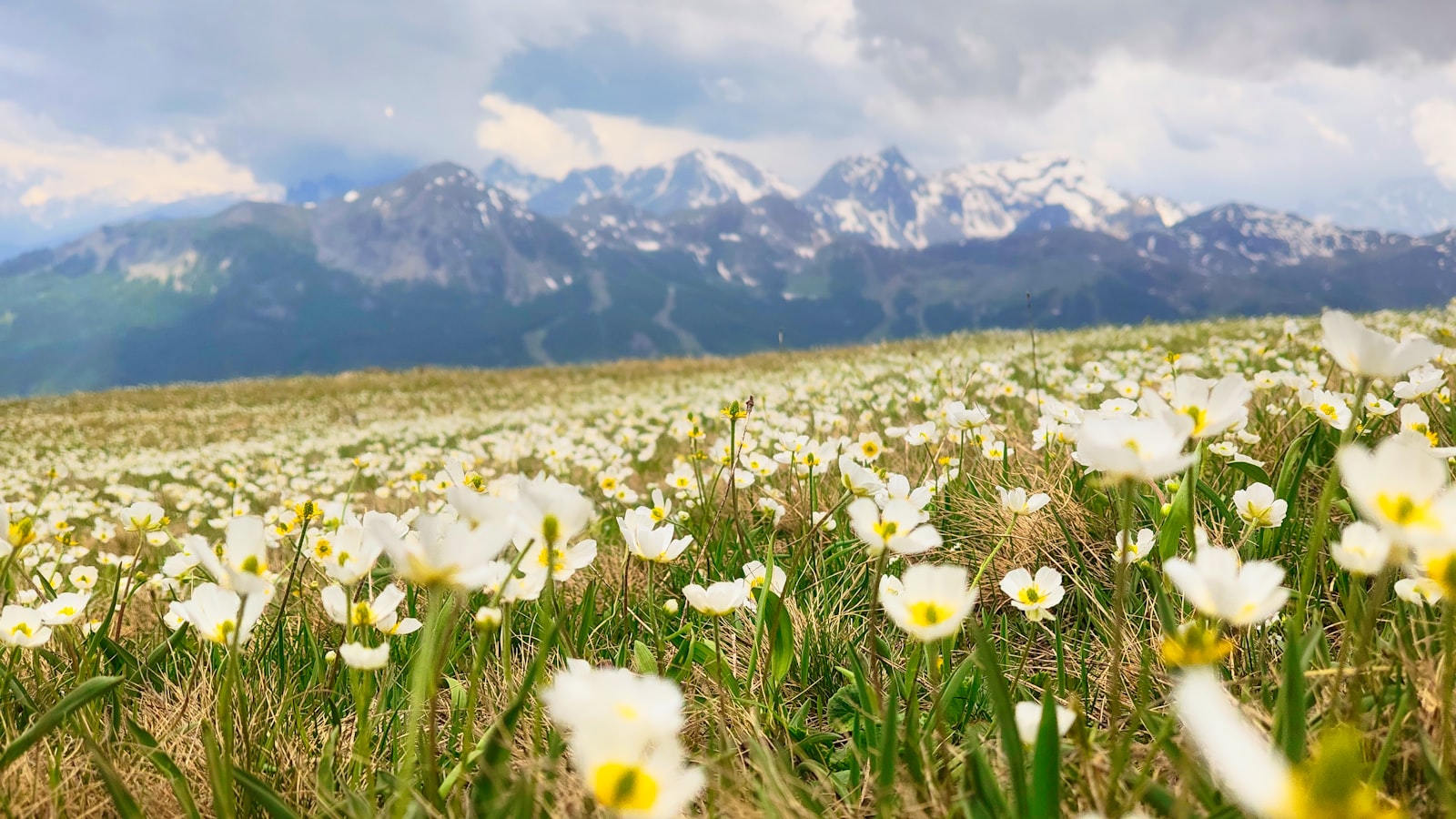
Ask any chalet host in the Alps about the unmarked bottle on the shelf, usually a murky yellow-green, usually offered after dinner in a small glass with a slight air of ceremony, and you will hear some version of the same story: my grandfather picked the plants himself, high above the village, in July. It is one of the most repeated claims in Alpine hospitality, and it is very often not quite true — which is not the same as saying the liqueur isn't real, or isn't good. It usually is both. The story just outpaces the supply.
What génépi actually is
Génépi is not one plant but a small cluster of Artemisia species — alpine wormwoods, cousins of the plant that flavours absinthe — that grow at high altitude, typically above 2,000 metres, in rocky, south-facing terrain across the French, Italian and Swiss Alps. The plants are small, silvery-grey, aromatic, and slow-growing; a single healthy clump takes years to establish on scree that offers it almost nothing. The traditional liqueur is made by macerating the dried flowering tops in a neutral alcohol base with sugar syrup, for weeks to months, producing a herbal, faintly bitter, distinctly alpine spirit that bears a family resemblance to Chartreuse without the monastic secrecy or the dozens of botanicals.
Why the picking story is complicated
Wild génépi has been picked by mountain communities for generations, traditionally as both a herbal remedy and a liqueur base, and the picking itself was once an unremarkable summer ritual. It no longer is. Several génépi species are now protected under regional and national flora conservation rules precisely because casual and increasingly commercial picking, driven by the plant's popularity, has visibly thinned wild populations in accessible areas near resorts. Some French departments restrict or prohibit picking entirely on protected alpine terrain; national park zones (the Vanoise, the Écrins) apply stricter rules again. The honest picture: some génépi in circulation is still legitimately hand-picked by people who know the regulations and the sustainable-harvest etiquette — take a few flowering tops per plant, never uproot, avoid the most fragile colonies — and a great deal more is either picked carelessly, picked illegally in a protected zone, or not picked at all, the "family recipe" story doing duty for a bottle of cultivated or commercially sourced génépi dressed up for chalet hospitality.
"Everyone's grandfather picked génépi above the village. If that were literally true there would be no génépi left above any village in the Alps. Most of what you drink now, if it's honest, comes from cultivated plants or a licensed picker who actually knows the rules."
Distiller, Vanoise foothills — three generations in production
The cultivated alternative, and why it is not a compromise
The more interesting recent development is agricultural, not romantic: several growers in Savoie and the Hautes-Alpes now cultivate génépi species at altitude on managed plots, producing a consistent, sustainable, and — critically — legal supply that takes pressure off wild populations without sacrificing much in flavour. The cultivated plant, grown at genuine altitude in similar stony soil, is not meaningfully different from its wild cousin in essential-oil content; the romance of the wild-picked version is real but increasingly a marketing position rather than a quality argument. Serious small producers now often blend a small proportion of ethically wild-picked material (from licensed, quota-respecting pickers) with a cultivated base, and are increasingly open about saying so on the label — a transparency that the murky-bottle, no-label chalet tradition has never offered.
How to taste and buy it properly
- Look for a label that states the species and the sourcing (cultivé, or wild-picked with a named permitted zone). A completely unlabelled bottle, however charming the story, tells you nothing about what is actually in it.
- Colour is not a quality signal. Home infusions vary wildly in colour depending on maceration time and light exposure; a very pale or very dark bottle is not inherently better or worse than a mid-gold one.
- Serve cold, in a small glass, after a meal — the traditional digestif role. It is not a mixer spirit; the bitterness is the point.
- The co-operative distilleries of the Maurienne and Tarentaise valleys are a more reliable source than a market stall with an unlabelled bottle and a good story, and several offer tastings that explain the sourcing directly.
The chalet-cabinet reality, kindly stated
None of this is an argument against the tradition — génépi's place in Alpine hospitality is genuine, old, and worth preserving, precisely why the picking restrictions exist in the first place. It is an argument for a slightly more honest version of the story: the bottle your host pours after dinner is very likely a good, warm, proper piece of Alpine culture, made by someone who knows what they're doing — increasingly from a cultivated plot rather than a smuggled handful from above the treeline, and none the worse for it. Ask where it came from. The good producers are proud to tell you, in detail, precisely because so much of the market still can't.
Related: the wines that share a cellar with the génépi bottle, and the cheese that closes the same meal.
The species, and why the taxonomy matters
What is commonly sold as "génépi" actually covers several related Artemisia species found at Alpine altitude — principally Artemisia genepi, Artemisia umbelliformis and Artemisia glacialis, sometimes referred to collectively by the French common names génépi noir, génépi blanc and génépi des glaciers. They differ subtly in aroma profile and in the specific high-altitude habitat each favours, and serious small producers will sometimes specify which species (or blend) went into a particular bottling — a level of detail almost entirely absent from mass-market or unlabelled chalet bottles. The taxonomic overview and distribution data is maintained by botanical research bodies including the Tela Botanica French flora database, a useful reference for anyone wanting to move past the marketing language into the actual botany.
The legal picking framework, region by region
Picking restrictions on wild génépi are not uniform across the French Alps — they vary by département, by specific protected-area designation, and by whether the picking location falls within a national park's core or peripheral zone. Within the Vanoise and Écrins national parks, picking of protected flora including génépi species is generally prohibited within the core protected zone (zone cœur) without specific authorisation, under rules published by each park's own management authority — see the Parc national de la Vanoise and Parc national des Écrins sites for current, zone-specific regulation. Outside national park boundaries, several départements maintain their own protected-flora lists (arrêtés préfectoraux de protection de biotope) that can restrict or condition picking even where no national park applies. The practical upshot for a casual visitor: picking génépi you encounter while hiking, anywhere in the high Alps, carries real legal risk that most visitors are entirely unaware of, and "everyone does it" is not a defence that has held up well where enforcement has occurred.
The maceration process, for anyone making it properly and legally
Traditional génépi production follows a simple ratio-based method that home producers using legally sourced or cultivated material can replicate: roughly 30–40 dried flowering tops per litre of neutral alcohol (traditionally 40–45% ABV eau-de-vie), macerated for a minimum of one month and often three to six for a fuller flavour, then filtered and sweetened with a sugar syrup to taste before a final resting period that lets the sweetness integrate. The colour range from pale straw to deep amber reflects maceration time, the specific plant material and light exposure during infusion, not a quality gradient — a common misunderstanding this piece's main text addresses. The finished liqueur typically settles around 40–45% ABV before dilution, though many artisanal versions are bottled lower, in the 25–35% range, after the sugar syrup addition.
Where the cultivated supply actually comes from
Cultivated génépi production in France is concentrated in specific high-altitude agricultural zones in Savoie's Maurienne and Tarentaise valleys and in parts of the Hautes-Alpes, where growers have adapted small mountain plots — often marginal for conventional agriculture — specifically to génépi's soil and altitude requirements. Several of these growers supply the co-operative distilleries that produce the majority of legally labelled génépi liqueur sold commercially in the region, a supply chain considerably more transparent, and considerably more sustainable at scale, than the wild-picking romance the product is still overwhelmingly marketed on. The interprofession overseeing Savoie's wider agricultural and drinks production, discussed in our Savoie wine guide, maintains links to several of these smaller distillers for readers wanting a traceable bottle.
Related: the fourteen-month Abondance that closes the same mountain meal.
[Preview edition — this article is illustrative while Issue No. 1 is in preparation.]
Advertisement
Partner · Property
Domosno
New-build and resale ski property across the French Alps. English-speaking, VAT-reclaim specialists.
View listings