Food · The alpine cellar
The wines of Savoie: a guide to France's most overlooked mountain appellations
Savoie produces barely 0.3% of French wine by volume but three indigenous grape varieties that exist nowhere else on earth, and a landscape — 1,500 metres of altitude range above the Isère and Arc valleys — that produces wines of genuine singularity. Here is how to navigate the appellations.
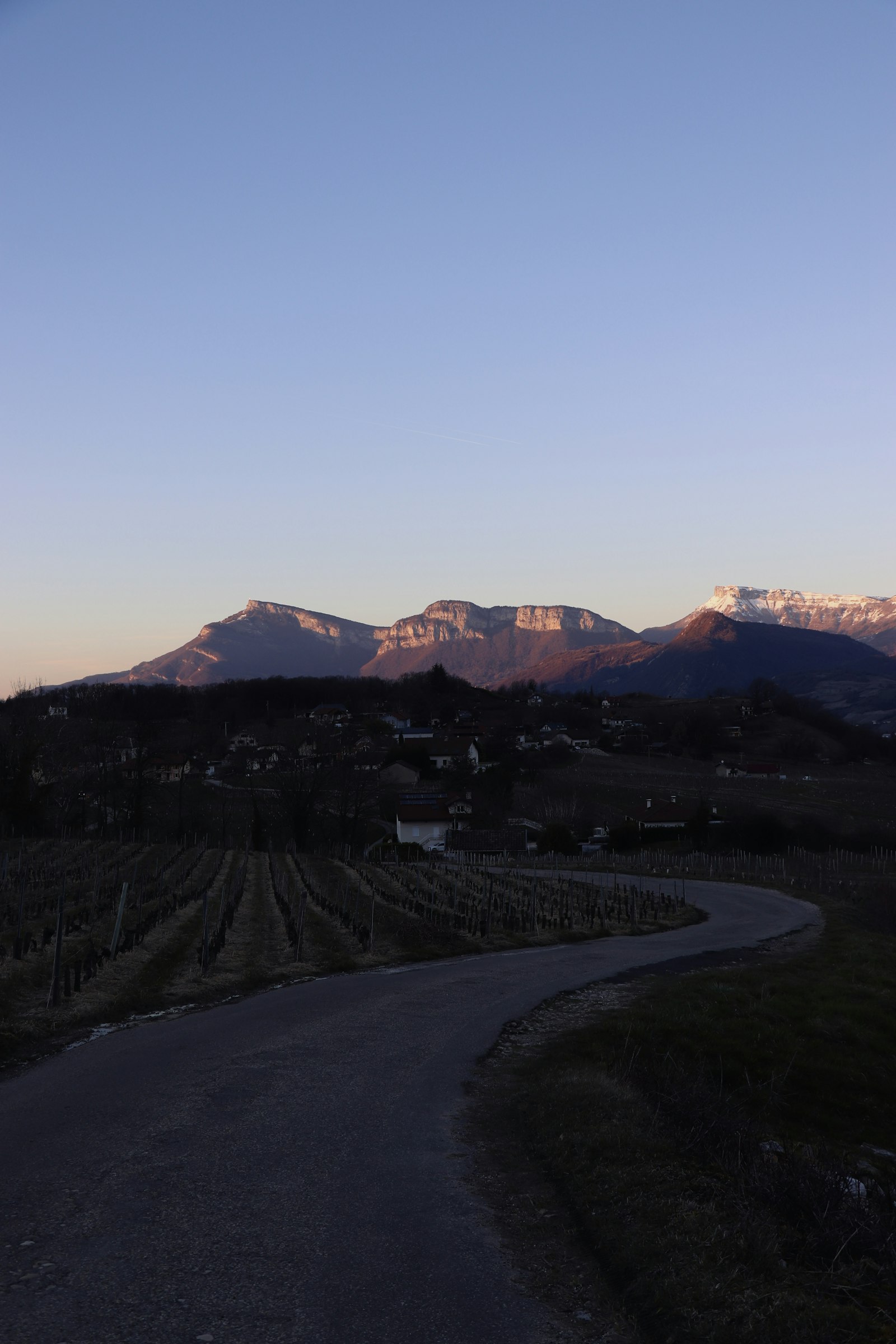
There is a test that applies to Savoie wine. Pour a glass of Chignin-Bergeron to someone who knows Burgundy, and watch the face. The first reaction is recognition — the colour, the weight, the stone-fruit architecture of Roussanne (here called Bergeron, the Savoyard name for the same grape). The second reaction, a moment later, is confusion: this tastes like a place, not a region, and it is a place that is not the Rhône. The third reaction — and this is the moment — is interest. Most wines today taste of a winemaker's intention. Good Savoie wines taste of where they are from, and where they are from is irreplaceable.
The appellation map
Savoie has one overarching AOC — Vin de Savoie — with fifteen permitted crus (named villages or localities) that may appear on the label when production follows specific rules. Below it sits Roussette de Savoie, a separate appellation exclusively for the Altesse grape. And scattered through the vineyards are two smaller, older AOP designations: Seyssel and Crépy. A tourist-office summary:
| Wine / cru | Grape(s) | Style | Best with |
|---|---|---|---|
| Apremont (white) | Jacquère | Dry, light, high acid, mineral | Fondue, lake fish, raclette |
| Chignin-Bergeron | Roussanne (Bergeron) | Rich, stone fruit, herbal | Berthoud, poulet à la crème |
| Roussette de Savoie | Altesse | Floral, structured, ages well | River trout, goat cheese, berthoud |
| Mondeuse (red) | Mondeuse | Dark berry, peppery, tannic | Diots (pork sausages), game, aged Abondance |
| Jongieux / Marestel | Altesse | Côteaux-de-Savoie style, fuller Roussette | Freshwater crayfish, cream dishes |
The Jacquère story
The dominant white grape of the Savoie is Jacquère — it accounts for roughly half of total production — and it is the grape most likely to disappoint and most capable of thrilling, sometimes in the same sip. Its natural inclination is toward high yields and neutral fruit; the entry-level production sold to ski fondue restaurants is exactly that. The dozen or so growers who treat it seriously produce something categorically different: wines of fierce minerality from the morainic soils of Apremont and Abymes, where the Granier massif's 1248 AD rockfall left a geology that Jacquère reads in the glass like a stone surface — the wine is famous locally for its note of wet slate.
The crus to seek: Apremont (the valley's benchmark), Abymes (fractionally more textured), and the Chautagne further north for a rounder expression grown on warmer clay-limestone. The prices are a quiet scandal — grand-cru-level terroir expression, restaurant pricing of €12–20 in the local cave, €7–12 off the estate. The ski-chalet fondue bottle is typically from the same appellation at commercial scale and should not be held against the grape.
"My best Apremont ferments naturally and takes three months in tank. My supermarket Apremont is the same word on the label. People try the cheap one and think they understand the appellation."
Vigneron, Apremont — twelve hectares, no tractor wide enough for the steep parcels
Mondeuse: the unheralded red
Savoie reds exist in the minds of most wine drinkers as a curiosity — thin, light, slightly alpine in the way that sounds poetic and tastes dilute. The Mondeuse of a serious vigneron is the rebuttal. It is not a light red: properly made from old vines on the granite soils of the Arbin cru, it carries tannin, purple fruit, black pepper and a savagery that recalls Syrah by way of somewhere colder. It ages. The best bottles from the 2019 and 2020 vintages are now entering their proper drinking window and reward serious glassware.
The producer list is short and the distribution thin — almost no Mondeuse of quality reaches Paris, let alone London. Louis Magnin at Arbin and Michel Grisard in the Isère delta are the benchmarks; buy from the cave des producteurs at Montmelian (the co-op that handles a third of Savoie's wine, well above the co-op stereotype) if you want a reliable introduction before committing to a case from an estate you haven't yet visited.
Where to taste, where to buy
- The cave coopérative at Apremont and the Cave de Cruet near Saint-Jean-de-Maurienne are the two most accessible introduction points for visitors coming from the valley ski roads.
- The Maison des Vins at Montmélian — forty producers represented under one roof, with tasting and purchasing — is the sensible starting point for a first systematic tasting. Open year-round; details at vindesavoie.net.
- Market day at Albertville (Friday) consistently has two or three estate producers; the one in the interior of the market, not on the tourist-facing ring, is usually the better buy.
- For the serious Roussette, the Jongieux hamlet above Yenne — a twenty-minute detour from the Chambéry–Bourg-Saint-Maurice road — has three small estates on a hillside that commands the most spectacular view in the appellation and sells direct from the farm.
The vintage calendar
Savoie, at altitude and in the shadow of Mont Blanc and the Belledonne range, is more exposed to vintage variation than most French regions. The climate patterns that govern the alpines — late frosts in May, hailstorms in July, the race to harvesting before the October rains — make every wine-growing season here an argument between the vigneron and the mountain. The general rules: warm years produce rounder, richer Chignin and Mondeuse that sacrifice some of the alpine slatiness for a weight that travels well; cooler years produce Apremont and Roussette that reward cellaring and are the region's real argument for serious wine attention. The interprofession's vintage notes at vindesavoie.net are reliable and unpretentious — written by growers for buyers, not for points. The honest advice: if you are buying from a good producer, buy from the cooler vintages first and try the warm ones as a contrast. The mountain wine that surprises you will be the one you didn't expect to age.
Related: the cheese that goes with all of it — the fourteen-month Abondance.
A producer shortlist
The Savoie wine world is small enough that a shortlist is possible and useful. These are producers whose wines appear consistently at the top of the appellation's quality range and who sell at the cave and sometimes export. Visits are by appointment except at the co-operative cave; do not arrive unannounced at a small estate during harvest or in mid-July.
| Producer | Commune | Wines to seek | Annual volume |
|---|---|---|---|
| Domaine Louis Magnin | Arbin (Chignin) | Mondeuse Arbin, Bergeron | ≈ 40,000 bottles |
| Domaine Michel Grisard | Fréterive | Mondeuse vieilles vignes, Jacquère | ≈ 25,000 bottles |
| Domaine Dupasquier | Jongieux | Roussette de Savoie, Gamay | ≈ 60,000 bottles |
| Domaine Belluard | Ayse (Bonneville) | Gringet (crémant + still) | ≈ 30,000 bottles |
| Cave de Chautagne | Ruffieux | Co-op; reliable Pinot Noir, Roussette | ≈ 800,000 bottles |
| Adrien Berlioz | Cruet | Roussette de Savoie, Jacquère nature | ≈ 15,000 bottles |
The hidden grape: Gringet
Few wine buyers outside Savoie have heard of Gringet, and Gringet wants it that way. Grown only in the Ayse commune above Bonneville — a small pocket of alluvial clay-limestone on the Arve valley's left bank — it produces both a still wine of tense, almost harsh freshness and a crémant (sparkling wine by the traditional method) that, tasted blind, consistently baffles experts: floral like Riesling, structured like aged Chenin, utterly its own. The only significant producer is Domaine Belluard. Production is small enough that the wine rarely crosses to Paris, never mind London; buying at the domaine during a Chamonix or Megève stay is the standard route. The Crémant du Bugey-Cerdon, from the adjacent Ain department, is a different grape (Poulsard and Gamay) and a different style; do not conflate them.
Reading a Savoie label
Savoie labels confuse even experienced wine buyers because the appellation naming is inconsistent. "Vin de Savoie Apremont" is the full legal name for the flagship white cru — but labels may say Apremont, Vin de Savoie Apremont, or Savoie Apremont depending on the producer's preference. The cru name always takes precedence over the varietal in indicating style. The vintage year matters more in Savoie than in most French regions of comparable prestige: the 2017, 2019 and 2022 vintages are cited by most producers as the best of the recent decade; 2018 and 2021 were frost-affected in several crus and the wines, while correct, show it. Current releases in most caves are 2023 (for wines needing early drinking) and 2021–2022 for the structured reds and Roussette that reward patience.
Wine and the property buyer
There is a thread connecting Savoie wine to the property market this newspaper covers that goes beyond lifestyle. The wine domaines of the Combe de Savoie — between Albertville and Chambéry — represent one of the few agricultural landscapes in the Alps that has not been overwhelmed by second-home pressure. The appellation rules require vine cultivation; you cannot build a chalet on an AOP-registered plot. The vignerons' families who have farmed the Arbin and Chignin terraces for three and four generations are, quietly, the custodians of the landscape that makes the Tarentaise approach road beautiful rather than merely functional. Whether any commercial structure can sustain this — given the succession pressure when children choose cities over cellar work — is an open question in the appellation. The interprofession des vins de Savoie publishes an annual economic bulletin that shows the trend: vineyard area has been roughly stable for a decade, but active producer numbers are declining, and the co-operative share is rising. A fine appellation slowly concentrating into fewer hands is not a crisis yet. It is the early stages of one.
Related: the cheese made in the same valleys — the Abondance that pairs with all of this.
[Preview edition — this article is illustrative while Issue No. 1 is in preparation.]
Advertisement
Partner · Property
Domosno
New-build and resale ski property across the French Alps. English-speaking, VAT-reclaim specialists.
View listings