Food · The valley table
The fromagerie in Taninges quietly supplying three Michelin kitchens
A visit to the cellars where Abondance is aged fourteen months, why three starred kitchens send unmarked vans down the Giffre valley — and why the co-operative has decided, firmly, not to grow.
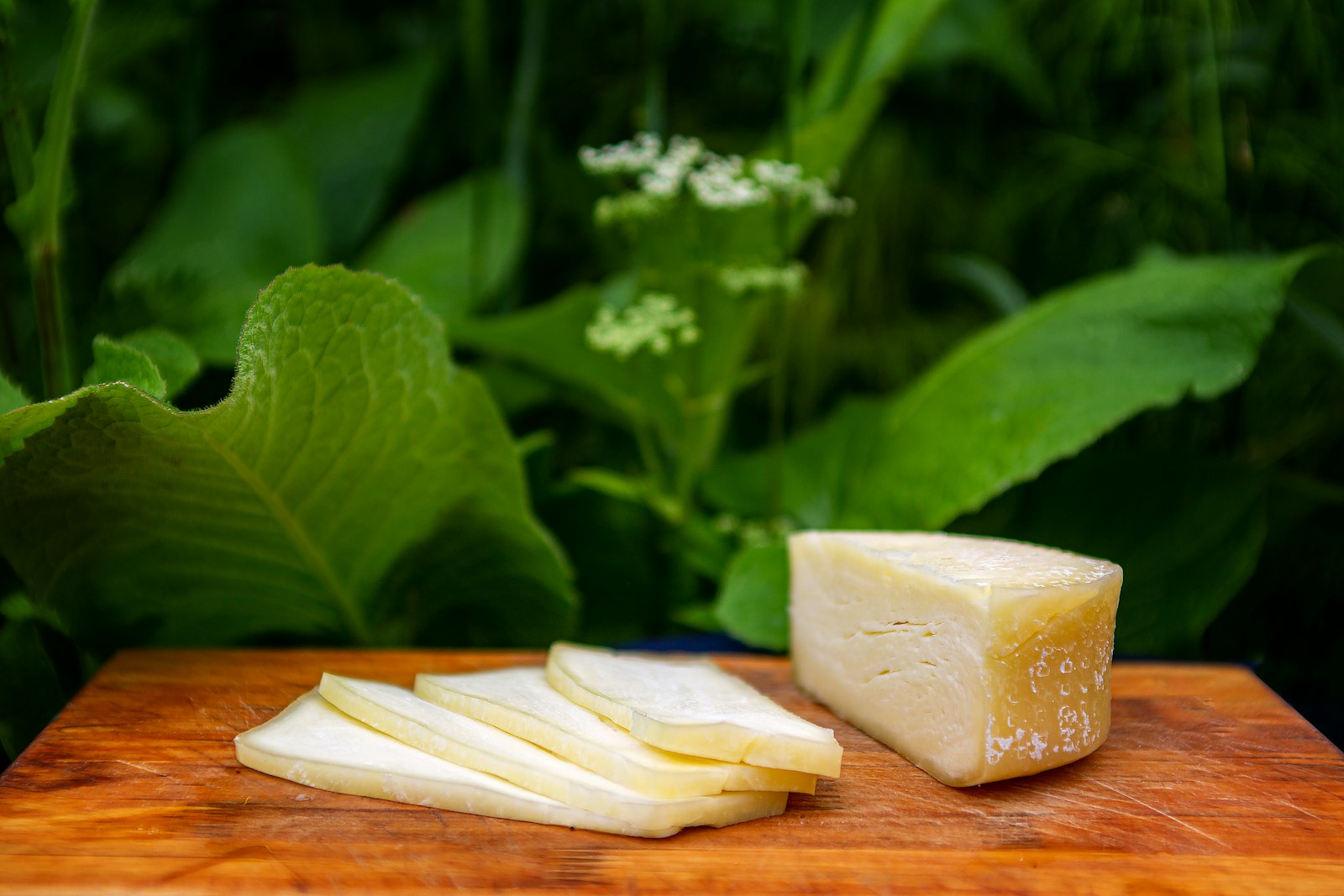
You will not find the cellar from the road. Taninges keeps its treasures the way the Giffre valley keeps most things — behind a plain door, down a corridor that smells of stone and whey, past a wall of copper that has outlived three governments. It is here, at eleven degrees and ninety-five percent humidity, that some of the best Abondance in Savoie spends fourteen months learning to be itself.
The cheese
Abondance is the quiet one of the Savoyard appellations — smaller than Comté, less famous than Beaufort, harder to make than either, say its partisans. The wheels are modest, around ten kilos, with a concave rind that is the appellation's legal signature. The milk must come from Abondance, Tarine or Montbéliarde cows; the summer wheels, made when the herds are on the alpage, carry the flora of altitude pasture into the paste.
The co-operative at Taninges collects from eleven farms, none further than twenty kilometres. The masterstroke is patience: where the appellation requires 100 days of ageing, the cellar master here holds his best summer wheels for fourteen months, turning and washing each by hand on spruce boards cut in the valley.
"At three months it is cheese. At fourteen it is a place."
The cellar master, who asked that his surname stay in the valley
The unmarked vans
The starred kitchens found the cellar the way chefs find everything: through a supplier who talked too much at a wedding. First one restaurant on the Annecy lakeshore, then a second in the Trois Vallées, then a third across the Swiss border began taking wheels — never many, four or five a month each, and always from the long-aged summer stack. None of the three names appears on any list the co-op publishes, and the co-op likes it that way; the relationship survives on discretion in both directions.
What do the chefs want with it? Not the cheeseboard, mostly. The fourteen-month wheels go into sauces that need depth without Beaufort's sweetness, get shaved raw over autumn vegetables, and in one kitchen finish a dish built around the memory of a childhood raclette. The point, one chef told us by telephone, is that the cheese "tastes of a specific valley in a specific summer — you cannot buy that from a catalogue."
Why they won't scale
The commercial logic screams expansion. The co-op has done the opposite: it caps production at what eleven farms yield, sells out every year by March, and has twice declined offers — one from a national affineur, one from a supermarket group — that would have tripled volume. The reasoning is agricultural, not sentimental. More volume means milk from further away, herds pushed for yield, and haylage creeping in where the appellation permits it; every step is small and every step is the end of the thing being sold.
There is a housing subplot, of course; there always is now. Two of the eleven farms have succession problems, and the young cheesemaker the co-op recruited last year spent four months finding a winter rental within reach of the 4 a.m. shift. The best cheese in the valley depends, like everything else here, on somebody being able to afford to live in it.
Where to taste it
- The co-operative's own counter in Taninges — mornings, and go early on Thursdays (market day).
- The Thursday market at Samoëns, where the long-aged wheels appear after Christmas.
- Or ask, politely, at any serious fromagerie between Cluses and Morzine. They will know exactly which cellar you mean, and they will not tell you the restaurant names either.
The appellation in numbers
Abondance is protected as an AOP (appellation d'origine protégée), the EU-level successor to the French AOC it earned in 1990. The registered specification — consultable via the national origin-and-quality institute, INAO — confines production to the Haute-Savoie and a fringe of neighbouring communes, and the scale is deliberately small:
| Measure | Abondance AOP | Comté (for scale) |
|---|---|---|
| Annual production | ≈ 3,000 tonnes | ≈ 64,000 tonnes |
| Producer farms | ≈ 170 | ≈ 2,300 |
| Farmhouse (fermier) share | ≈ 40% | marginal |
| Minimum ageing | 100 days | 120 days |
| Permitted breeds | Abondance, Tarine, Montbéliarde | Montbéliarde, Simmental |
That fermier share is the appellation's soul: four wheels in ten are still made on the farm that milked the cows, a proportion almost extinct among the big mountain cheeses. The general background is well summarised on the cheese's Wikipedia entry; the specification itself rewards reading for its strangely moving precision about haymaking dates.
How to read a rind like a buyer
- The plaque. Every lawful wheel carries a casein plate on the heel — oval for fermier production, square for dairy (fruitière) production. No plate, no appellation.
- The concave heel comes from the linen band that binds the young wheel; a flat-heeled "Abondance" is either mislabelled or misjudged.
- Colour tells season. A paste shading toward deep gold announces summer alpage milk and its carotene; pale ivory is winter hay milk — different, not lesser.
- Ask the age in months, not adjectives. "Bien affiné" means nothing; "quatorze mois" means everything.
The economics of fourteen months
Why doesn't everyone age long? Because time is the most expensive ingredient in the building. A wheel entering the cellar represents roughly 100 litres of milk — about €55 at the co-op's producer price — plus make-labour. Every month in the cave costs storage, handling (each wheel is turned and rubbed twice weekly), weight loss to evaporation of around 1% monthly, and the risk of a wheel going wrong at month nine after eight months of investment. The progression looks like this:
| Age | Wholesale €/kg | Counter €/kg |
|---|---|---|
| 100 days (legal minimum) | ≈ 11 | ≈ 17 |
| 8 months | ≈ 14 | ≈ 22 |
| 14 months | ≈ 18 | ≈ 28–32 |
The starred kitchens pay the top of that band happily — it is still one of the cheapest ingredients of distinction on their cost sheets. The co-op's restraint is what keeps the band from collapsing: scarcity is doing the marketing.
A short tasting itinerary for the Giffre and beyond
Make a morning of it. Start at the co-operative counter in Taninges; continue to the Thursday market in Samoëns (the valley's best single cheese stall sets up by the Gros Tilleul, the 700-year-old lime tree); detour to the Fromagerie of Abondance village itself if you are pushing on toward Châtel — the valley that named the cheese and the cow deserves the pilgrimage. The tourist offices at samoens.com and abondance-tourisme.com keep current market days and cellar-visit hours. Then buy a whole quarter-wheel, not slices: it keeps six weeks in a cellar or a cool garage, improving mildly, and vacuum-packed slices are how good cheese is embalmed.
Cooking with it: the berthoud, and what not to do
Abondance is the only Savoyard cheese with its own protected dish. The berthoud — a thick slice of long-aged Abondance melted in an earthenware dish with a glass of dry white (Chignin or Apremont), a rub of garlic and a suspicion of madère, eaten with potatoes and viande des Grisons — earned its own "traditional speciality" protection in 2020, and the Abondance valley's restaurants guard the canon jealously. At home the ratios are forgiving: 200 g of cheese per person, oven fierce, wine measured in centilitres not glasses, and the fourteen-month wheels are frankly wasted on it — the eight-month is the cooking sweet spot.
In fondue, Abondance is the structure in the classic moitié-moitié's country cousin: try equal thirds Abondance, Beaufort and a young Comté, and the mixture needs less cornflour than the all-supermarket version because the mountain pastes emulsify better. What not to do, per every affineur we asked: do not grate it into gratins like a common Emmental (the aromatics volatilise), do not serve it fridge-cold (an hour on the counter, always), and never, on pain of a Savoyard's silence, buy it pre-grated. The fourteen-month wheels want nothing but a knife, pain de campagne, and possibly a Roussette de Savoie — the appellation's whites are catalogued by the interprofession at vindesavoie.net, and the pairing is the valley arguing its own case.
Related: the housing problem that reaches even the cheesemakers.
[Preview edition — this article is illustrative while Issue No. 1 is in preparation.]
Advertisement
Partner · Property
Domosno
New-build and resale ski property across the French Alps. English-speaking, VAT-reclaim specialists.
View listings