Practical · Healthcare
What actually happens if you get sick in your French chalet: a second-home owner's guide to the healthcare system
French healthcare is excellent and the paperwork is genuinely confusing for a part-time resident. A working guide to what covers you, what doesn't, and what to actually do if it goes wrong on a Tuesday afternoon in February.
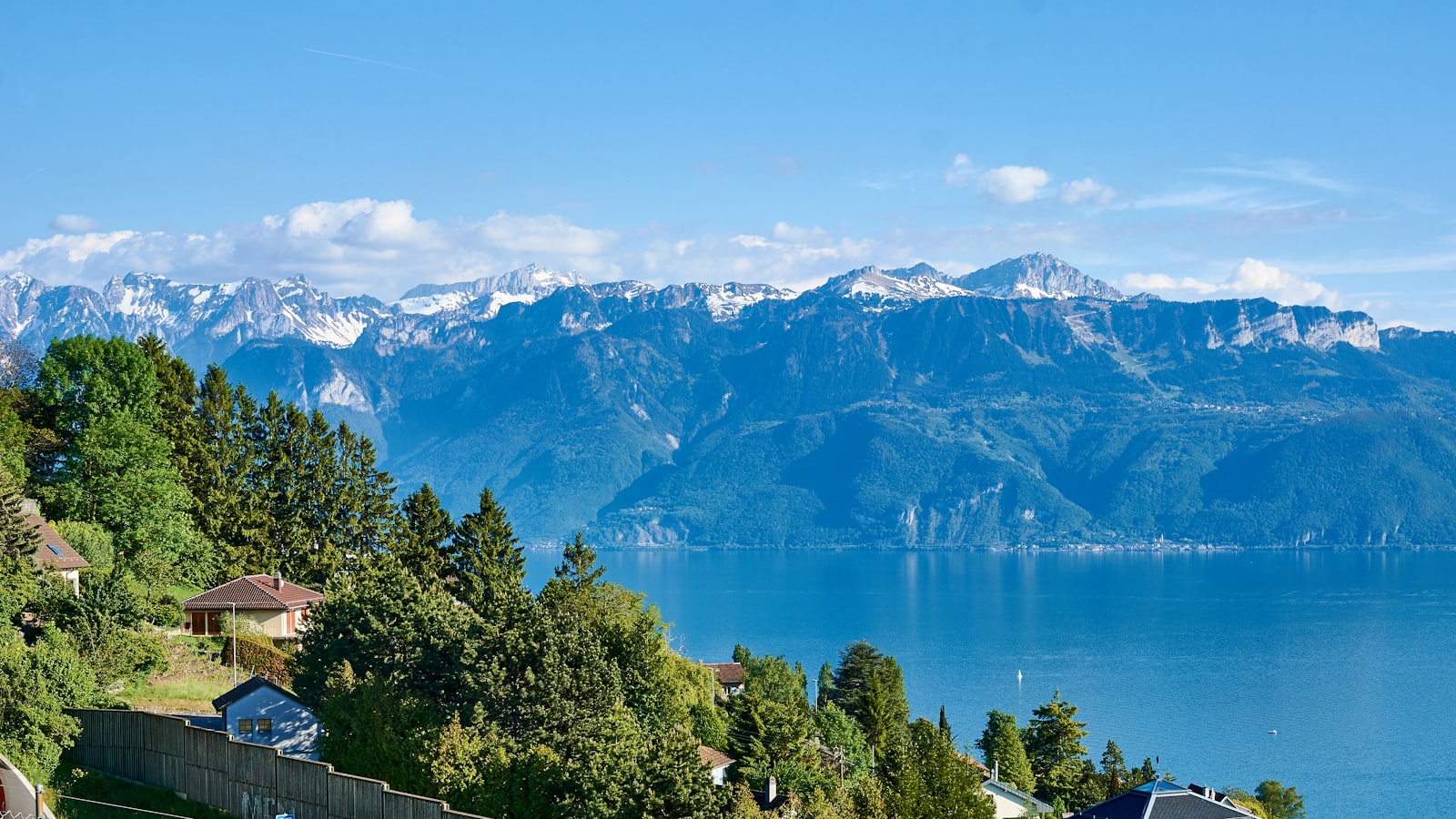
The French healthcare system is, by most international comparisons, excellent — the World Health Organization has ranked it among the best globally for overall performance, and the mountain communes covered by this newspaper are generally well served by hospitals in the valley towns, with genuine trauma expertise given the volume of skiing and mountain-sport injuries they handle. What confuses second-home owners is not the quality of care but the question of who pays for what, and the answer depends entirely on your residency status, your nationality, and which piece of paper you happen to be carrying when it happens.
The four categories of cover, and which applies to you
| Your status | What covers you | Key limitation |
|---|---|---|
| EU/EEA/Swiss visitor, short stay | GHIC or EHIC card | State-system care only; no repatriation; no private clinics |
| UK visitor (post-Brexit) | UK GHIC (Global Health Insurance Card) | Same as EHIC in practice; check validity dates |
| Non-EU visitor (US, Australia, etc.) | Private travel insurance only | No reciprocal state cover at all — insurance is not optional |
| Long-stay visa holder (VLS-T) | Comprehensive private insurance required for the visa | Must be arranged before the visa is issued, not after |
| French tax resident | PUMA (Protection Universelle Maladie) + carte vitale | Requires genuine habitual residence, not just property ownership |
The critical point that catches owners out: owning a French property confers no healthcare rights whatsoever. There is no property-linked healthcare status in France. A British owner who spends six weeks a year in a €2m chalet has exactly the same healthcare entitlement as a British tourist on a two-night stay, unless they have separately established French tax residency — a status governed by the criteria discussed in our 90/180 rule explainer, not by the property register.
The carte vitale question
The carte vitale — the green chip card that French residents use at every pharmacy, doctor and hospital visit — is the single most misunderstood object in this entire subject. It is not a health insurance card in the British or American sense; it is a payment and reimbursement mechanism linked to PUMA, France's universal healthcare coverage system, available only to genuine habitual residents (broadly, present in France more than 6 months a year with a stable, regular situation) or to those in specific categories such as students or certain long-term visa holders. A second-home owner who spends 70 days a year in France, however wealthy, does not qualify, and — this is the part that generates the most confused correspondence to this desk — should not attempt to obtain one. Doing so under a residency status you do not genuinely hold is a misrepresentation that can complicate both your healthcare and, separately, your tax position.
What actually happens in an emergency
The system is simpler in practice than the paperwork suggests. Call 112 (the European emergency number, works identically to 15/17/18 in France) or 15 (SAMU, the medical emergency service) for a genuine emergency. Mountain rescue for accidents on marked trails or ski pistes is handled by the PGHM or the resort's piste patrol and, as covered in our rescue-logs piece, the rescue itself is free at the point of need. What is not free is everything after the helicopter or ambulance: the emergency-room treatment, any surgery, the hospital stay, and — for non-residents wanting to return home for ongoing treatment — repatriation, which can run into five figures without cover.
"The rescue is the easy part — it's free, it's fast, the PGHM are extraordinary. The bill people don't expect is the ten days in Sallanches afterwards, and the flight home on a stretcher if it comes to that."
Insurance broker specialising in Alpine second-home policies
Building the right cover, in order of priority
- GHIC/EHIC first, for EU/UK owners. Free, covers state-system treatment, takes ten minutes to apply for or renew online — there is no reason not to carry a valid one.
- A dedicated travel or second-home medical policy, always. This is not optional even with GHIC/EHIC in hand — it fills the gap on repatriation, private treatment, and any care GHIC doesn't reach. Check specifically for mountain-sport and altitude clauses; many standard travel policies exclude off-piste skiing, ski touring or activity above a stated altitude ceiling.
- Non-EU owners need comprehensive private cover as the primary layer, not a supplement — there is no reciprocal state-system fallback to lean on.
- Keep a physical and digital copy of your policy, in French if possible, in the chalet itself — not only on a phone that might be left in a ski jacket at the bottom of a mountain.
The pharmacy, and the GP question
French pharmacies (identifiable by the green cross) are an underused resource for visiting owners: pharmacists are highly trained, can advise on and dispense a wide range of treatments without a doctor's appointment, and are usually the fastest route to sorting out a minor issue on a Sunday when nothing else is open. For non-emergency GP care, most resort towns have at least one English-speaking practice, and paying privately as a visitor (a médecin conventionné consultation typically runs €30–50) is straightforward — you pay at the appointment and claim back what your insurance covers, rather than navigating the reimbursement-via-carte-vitale system that residents use. Keep every receipt; French medical paperwork is precise, and insurers reward precision.
None of this is complicated once mapped out — it is simply a system built around residency in a country where most of this newspaper's readers are, deliberately, not resident. Get the GHIC or EHIC current, buy the right insurance before the season rather than after an injury, and treat the carte vitale as something you are not entitled to rather than a bureaucratic hurdle to clear. The mountain does not check your paperwork before it lets you fall; make sure the paperwork is right before you go up.
PUMA and residency, in more technical detail
Protection Universelle Maladie, France's universal healthcare coverage system introduced in 2016, extends state healthcare cover to anyone working or residing stably and regularly in France, replacing the older system that linked cover more strictly to employment status. The residency test that matters for second-home owners is set out by Ameli, the French national health insurance fund's official site: broadly, a "stable and regular" situation requires residence in France for more than three months, with the six-month-per-year threshold used as the practical benchmark in most cases for the "habitual residence" test that unlocks full PUMA entitlement and carte vitale issuance. A second-home owner who spends 70–90 days a year in France under the 90/180 Schengen allowance is, by definition, well short of this threshold and has no PUMA claim regardless of property ownership, wealth, or how many years the pattern has continued.
GHIC/EHIC: what it actually covers and what it doesn't
The UK's Global Health Insurance Card (successor to the EHIC for UK nationals post-Brexit, though existing EHICs remain valid until their printed expiry) entitles the holder to state-provided healthcare in France on the same basis as a French resident would receive it — meaning you still pay the standard co-payment (ticket modérateur) that French residents pay, typically around 30% of the state tariff for a GP consultation, with GHIC covering the remainder. It does not cover: private clinic treatment, repatriation to the UK, dental treatment beyond emergency pain relief, or ongoing treatment for a condition that existed before travel. Current application and coverage details are maintained at nhs.uk. EU nationals use the equivalent EHIC issued by their home member state, with broadly identical coverage principles across the EU/EEA.
What French hospitals near the resorts actually offer
| Hospital | Nearest to | Notable capability |
|---|---|---|
| CH Annecy Genevois | Annecy, Aravis resorts | Full trauma centre, major regional hospital |
| CHU Grenoble Alpes | Isère resorts (Alpe d'Huez, Les Deux Alpes) | University hospital, most advanced regional trauma & neurosurgical capacity |
| CH Sallanches | Chamonix, Megève, Saint-Gervais | Dedicated high-volume ski-trauma unit; English-speaking staff common in season |
| CH Albertville-Moûtiers | Tarentaise resorts (Val d'Isère, Courchevel, Méribel, Les Arcs) | Two-site trauma centre serving the highest-volume ski trauma caseload in France |
| Hôpitaux Universitaires de Genève (HUG) | Northern resorts, cross-border option | Swiss private/university hospital, English widely spoken, higher cost without Swiss/GHIC cover |
CH Sallanches and CH Albertville-Moûtiers in particular handle exceptionally high volumes of skiing and mountain-sport trauma relative to their size, and staff at both are accustomed to treating international patients — English-speaking capacity is generally good in season, though not guaranteed on every shift. The HUG option in Geneva is worth knowing about specifically for its accessibility from the northern resorts (Chamonix, the Portes du Soleil) — treatment there as a non-Swiss-resident is billed privately and at Swiss cost levels unless specific reciprocal arrangements apply, so it should be a considered choice for complex care rather than a default emergency option.
Mountain-sport insurance exclusions, read carefully
The single most consequential small-print issue in Alpine second-home insurance is the mountain-sport activity clause, and it deserves more attention than most buyers give it. Common exclusion patterns worth checking against explicitly before you need the policy: an altitude ceiling (frequently 3,000m or 4,000m, which excludes several classic high routes including sections of the Mont Blanc massif discussed in our summit-quota piece); an "off-piste" exclusion that may or may not distinguish between patrolled off-piste terrain accessible from a lift and genuine backcountry ski touring; and a "mountaineering with ropes and technical equipment" exclusion that can inadvertently catch via ferrata routes, now hugely popular with ordinary hiking-level visitors and sometimes mis-categorised by policyholders as simple hiking. Read the policy document itself, not the marketing summary, and get exclusions confirmed in writing for anything ambiguous before the season, not after an incident.
Related: what a month of PGHM rescue logs reveals about how these situations actually arise, and the residency rules that determine which of these cover categories applies to you.
[Preview edition — this article is illustrative while Issue No. 1 is in preparation.]
Advertisement
Partner · Property
Domosno
New-build and resale ski property across the French Alps. English-speaking, VAT-reclaim specialists.
View listings