Mountains · Access
Should Mont Blanc have a summit quota? The argument that keeps returning
The mayor of Saint-Gervais has proposed a daily summit quota for three years. The guides disagree. The climbers ignore it. And every summer, the PGHM publishes its statistics and the cycle begins again. Why the debate is harder to resolve than it looks.
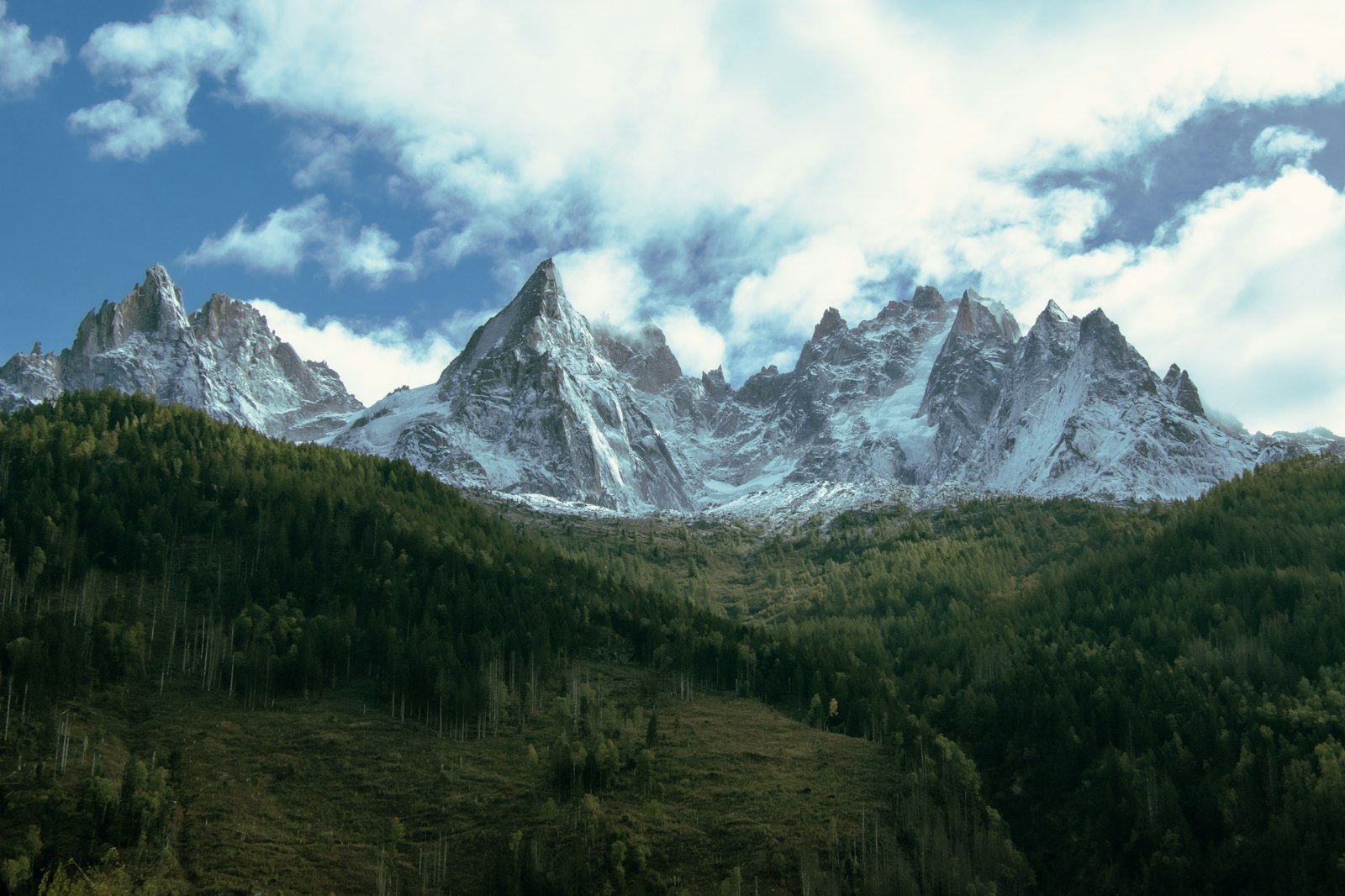
The queue at the Vallot hut, at 4,362 metres on a still July morning, can stretch to an hour. Below, on the Bosses ridge, climbers are roped together at intervals that would embarrass any guide. Above, the summit cone — technically simple, atmospherically not — receives several hundred visitors on a good weekend day. Since 2022, the mayor of Saint-Gervais-les-Bains has proposed capping that number at around 214 per day. Since 2022, the proposal has not become law. The reason is instructive about both the politics of mountain access and the governance of a resource that belongs to nobody in particular.
The case for a quota
The numbers are real. Mont Blanc's normal route, the Voie Royale via the Goûter hut, sees 20,000–25,000 summit attempts a year, concentrated into a six-to-eight-week window between late June and mid-August. On peak days in July, the summit registers over 500 people — a number that the PGHM, the mountain guides, and the glaciologists who study the summit's geology all describe as incompatible with safe navigation. The arguments for restriction:
- Safety. Overcrowding at the Goûter hut — the staging point at 3,835 m — forces climbers to either bivouac without shelter or push for the summit in conditions that are deteriorating. The PGHM's June–August intervention pattern shows a strong correlation between high-traffic days and callout volume.
- Environmental damage. The summit snowfield accumulates human waste in winter and releases it in summer. The Compagnie du Mont-Blanc has documented increasing contamination of meltwater streams in the Mont Blanc massif; the summit toilet infrastructure is inadequate for current volumes by the PGHM's own assessment.
- The experience itself. The argument that receives the least official weight but the most guide sympathy: Mont Blanc in a queue is not Mont Blanc. The summit that generations of alpinists have described as the defining experience of their climbing lives is, on a peak July weekend, closer to a cable car destination with wind and altitude sickness.
The case against — and why the guides lead it
The Compagnie des Guides de Chamonix, the world's oldest mountain guiding company, has opposed the quota formally and consistently. Its objections are not what people expect from an organisation built on mountain culture:
"A quota administered by the mairie of Saint-Gervais will benefit those who know how to navigate French bureaucracy. That means wealthy clients, guide-company bookings, and people with time to plan six months ahead. It will exclude exactly the independent alpinist who represents the tradition we are supposed to be protecting."
Representative, Compagnie des Guides de Chamonix, June 2026
The guides' preferred mechanism is price — not a permit, but a Goûter hut booking that is genuinely limited and genuinely expensive for those who cannot justify it. The hut already requires reservation; the guides argue that tighter capacity at the hut, with realistic pricing that reflects the true cost of mountain operations, would achieve the same summit thinning without creating a quota lottery that a civil servant administers from an office in Saint-Gervais.
What the mairie has actually tried
Saint-Gervais' 2022 initiative was a voluntary system — an arrêté asking climbers to obtain a "charte de bonne conduite" before ascending. The uptake was, predictably, low: the climbers who already understood mountain ethics signed it; the ones whose behaviour generated the problem did not know it existed. A stronger measure — a true prefectural permit with enforcement — has been drafted twice and deferred twice, pending resolution of the fundamental jurisdictional question: who owns Mont Blanc?
The answer, in French law, is nobody, or more precisely the state. The summit straddles the communes of Chamonix-Mont-Blanc and Saint-Gervais-les-Bains; the access routes traverse the national parks boundary, the ONF forest, private land, and a glacier that is not anyone's property in any conventional sense. A binding quota requires a prefectural decree that the prefecture has so far declined to issue, citing both the jurisdictional complexity and the enforceability question: how do you count climbers at 4,000 metres with the staffing the prefecture can afford?
The international comparison
| Summit | Country | Quota / permit system | Fee |
|---|---|---|---|
| Everest | Nepal | Climbing permit required | $11,000 per person |
| Denali | USA | National Park climbing fee | $425 per person |
| Kilimanjaro | Tanzania | Park fee per day | $70–100/day |
| Mont Blanc | France | No permit required | €0 |
The comparison is telling but not conclusive. Everest's permit funds Nepalese mountaineering development. Denali's fee covers ranger services on a route that requires weeks of self-sufficiency. Kilimanjaro's day rate funds the park's infrastructure. Mont Blanc's zero-fee, zero-permit status is partly a philosophical statement about the right of citizens to access their mountains, and partly an accident of historical governance that predates the route's current traffic levels by about a century.
What climbers should know now
The quota is not yet law. The probability that some form of permit or booking system arrives before 2030 is, in the guides' private estimate, high — the environmental and safety pressure will not decrease, and the political options are narrowing. In the meantime, the practical constraints that function as informal limits:
- Goûter hut bookings open in late spring and fill within hours for peak dates. Climbing without a hut reservation is technically possible but practically discouraged — bivouacking at altitude above the Goûter is legal, uncomfortable, and responsible for a disproportionate share of the rescue log.
- The Tête Rousse hut below the Goûter is the less prestigious but more available alternative for the two-hut route; it adds vertical and time but reduces the booking competition.
- The Aiguille du Midi – Vallée Blanche approach, technically harder and requiring more alpine experience, sees a fraction of the Voie Royale traffic and remains the guide-preferred route for clients who want a genuine alpine experience rather than an altitude record.
The mountain will survive the debate. The question is what it becomes on the other side of it — a managed natural experience with priced access and limited places, or a free public good that is damaged by the freedom it offers. The Alps have navigated versions of this question before. The answer, historically, has been the managed version, imposed reluctantly and adopted gratefully. Watch the Goûter hut booking system: it will be the mechanism, whichever politics surrounds it.
Related: what the PGHM encounters each June on these routes, and the lift projects that concentrate crowds on the massif's margins.
The Goûter hut booking system: the de facto limit
In the absence of a summit permit, the Goûter hut (Refuge du Goûter, 3,835 m, managed by the Compagnie des Guides de Chamonix on behalf of the French Alpine Club) functions as the effective choke point on the normal route. The hut has 120 beds and 40 bivouac spaces; the majority of summit attempts via the Voie Royale require an overnight stay. Bookings open on a rolling basis from mid-March and are managed through the FFCam reservation system at ffcam.fr. The rule that many climbers discover too late: peak-season dates (mid-July to mid-August) fill within hours of opening, often within the first forty minutes. The practical implications of showing up at the Goûter without a reservation are: possible space in the gardien's emergency reserve (unpredictable and crowded), a descent to the Tête Rousse hut at 3,167 m (adding 700 metres of vertical to the next morning), or bivouacking on the glacier below the hut in conditions that are, in the words of the hut's current gardien, "not what this route is for."
The environmental case, updated for 2026
The case for access restrictions has been strengthened by two studies released since the 2022 quota proposal. A glaciological survey of the Goûter couloir — the gully approach to the hut that is the route's most dangerous section, subject to regular rockfall — found that the freeze-thaw cycle accelerating with climate warming was destabilising the section during daylight hours in July and August, increasing the rockfall frequency precisely when traffic is highest. The PGHM revised its guidance following the survey: it recommends ascent of the couloir before 6 a.m. and descent before noon, a timing constraint that is difficult to honour when the hut is overbooked and departure times are staggered by occupancy pressure rather than safety optimal times.
The second study, from the CNRS environmental research team that monitors the summit plateau's snow chemistry, documented measurable increases in human biological contamination in the surface snowmelt at 4,700–4,800 m — above the Vallot shelter, where facilities are minimal and climber density is highest on summit days. The methodology and the findings are available through the CNRS open-access repository; they are the most concrete environmental case that has been made for access management, and the study authors' recommendation — explicit in the conclusion — is a daily summit limit with seasonal variation to concentrate limits on the weeks of highest traffic.
The political landscape around the quota
The mayor of Saint-Gervais operates within a specific French political constraint: the commune has the power to regulate activity on its territory through arrêté, but the summit of Mont Blanc and the access routes cross the territories of multiple communes, the departmental authority, the national park boundary (the Réserve Naturelle Nationale de l'Aiguilles Rouges is adjacent, though the summit route is outside it), and the ONF's forest management perimeter. A commune arrêté that is not backed by a prefectural order is, practically speaking, guidance rather than law.
The prefectoral position has been that the legal basis for a summit access restriction — given that the mountain is not formally a nature reserve and the route is not a classified path in the sense that permits restriction — is untested and potentially vulnerable to legal challenge. Two constitutional arguments shadow the debate: the droit à la montagne (the public's right to access mountains) that runs through French outdoor recreation law, and the principle that restrictions on freedom of movement require clear legislative authority. Neither is an insuperable obstacle — France restricts access to specific sites on environmental and safety grounds regularly — but both create legal risk that the prefecture has so far judged not worth taking before the political consensus is clearer.
| Year | Proposal | Outcome |
|---|---|---|
| 2018 | First voluntary "charter" proposal (Saint-Gervais) | Low uptake; no enforcement mechanism |
| 2022 | 214/day limit proposed with charte compliance | Not enacted; prefectoral consultation opened |
| 2023 | Compulsory booking study commissioned | Report published; no legislation followed |
| 2025 | Environmental study findings published | New prefectoral consultation announced |
| 2026 | Permit-system pilot proposed for 2027 | Under consultation at time of publication |
If a permit system comes: what to expect
The models under discussion in the 2026 consultation follow one of three structures. A hut-linked permit — where booking the Goûter automatically registers a summit attempt and the daily limit is managed through hut capacity — is the guides' preferred approach, because it integrates with an existing system. A standalone permit, managed like the Everest system through a national or regional portal, is the administrative approach but requires enforcement at altitude. A price-based limit — a summit fee that rises until demand falls to the target level — is the economist's answer and the politician's nightmare: it explicitly prices out lower-income climbers, a charge that the egalitarian tradition of French mountain access makes politically toxic.
The likeliest near-term outcome, in the assessment of people close to both the mairie and the guides, is a hut-capacity reduction at the Goûter combined with a mandatory pre-registration (free, online) for summit attempts — a system that creates a registry without imposing a price or a hard limit, while giving the authorities the data to monitor actual summit traffic and enforce against commercial operators who run clients without registration. Whether that constitutes a "quota" depends on how strictly the registration ceiling is set. The mountain, as usual, does not care about the politics. It continues to attract 25,000 attempts a year and to be, on a clear still morning in July, exactly what people come for.
[Preview edition — this article is illustrative while Issue No. 1 is in preparation.]
Advertisement
Partner · Property
Domosno
New-build and resale ski property across the French Alps. English-speaking, VAT-reclaim specialists.
View listings