Infrastructure · Connectivity
Fibre arrives in the Tarentaise — and changes who can live in the Alps year-round
A €120m deployment is wiring the Tarentaise at speeds that make remote working viable twelve months a year. The first beneficiaries are owners with spare bedrooms; the second will be the year-round economies of resorts that have survived on snowflakes.
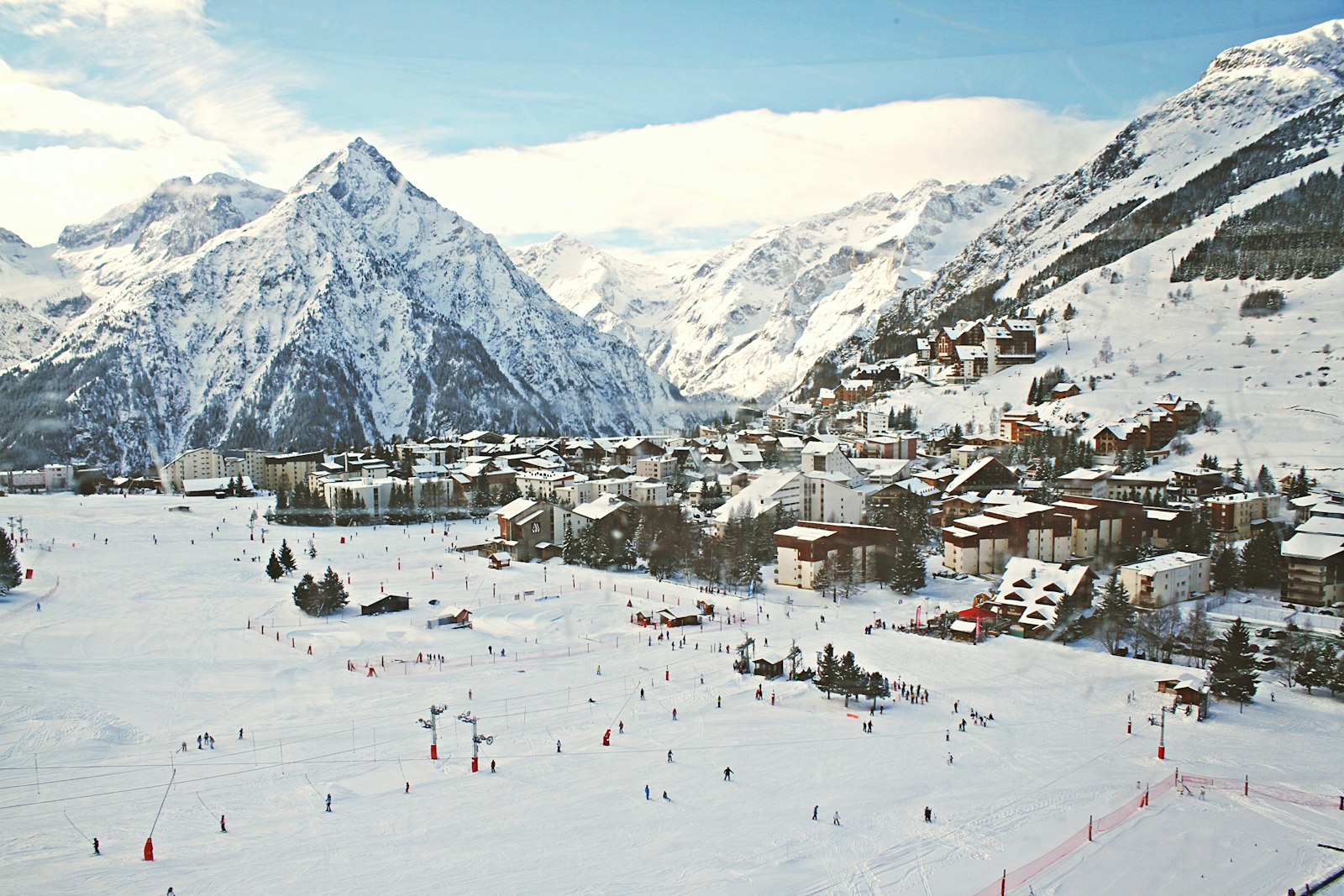
For a decade, "work from the chalet" was an aspiration sustained by 4G hotspots, satellite dishes and the stubborn optimism of people who had good enough connectivity until they joined a video call from the wrong end of the building. That era is ending. The Savoie fibre deployment — structured under the Savoie Très Haut Débit initiative — has now passed the halfway mark in the Tarentaise valley, and the communes at altitude are receiving connections that were once only a city-centre boast.
Where the fibre is, and where it arrives next
| Commune / resort | Status July 2026 | Target date |
|---|---|---|
| Bourg-Saint-Maurice | FTTH deployed, orders open | Live |
| Sainte-Foy-Tarentaise | FTTH deployed, orders open | Live |
| Les Arcs (Arc 1600–1800) | Deployment underway | Q4 2026 |
| Val d'Isère village | Infrastructure permit obtained | H1 2027 |
| Tignes le Lac | Planning phase | H2 2027 |
| Champagny-en-Vanoise | Live (as part of Courchevel scheme) | Live |
The deployment speeds typically available on activation are 300–1,000 Mbps download, symmetrical upload in the 100–500 Mbps range. For context: a 4K video call requires 25 Mbps, and a household running two simultaneous remote work streams, a media server and a teenager's gaming console is comfortable at 100 Mbps. The fibre numbers leave room to spare.
What it changes for owners
The first-order effect is landlord economics. An owner who previously had to choose between "summer let" and "quiet winter rental to a seasonnaire at capped rent" now has a third option: the long-stay remote worker who wants to be in the mountains for a month, has a laptop and a broadband requirement, and will pay a summer-rate premium for connectivity that matches their city office. Several Bourg-Saint-Maurice agencies report that this profile — often a professional in their thirties, often with a partner who also works remotely — now accounts for roughly one in five November–April enquiries. Six months ago it was one in fifteen.
"The moment we could advertise a gigabit connection, we started getting enquiries from people who had never thought about the Alps in February. They don't ski — they just want a month that doesn't look like their flat in Paris."
Property manager, Bourg-Saint-Maurice
The year-round economy argument
The implications go beyond individual landlords. Alpine resort economies are built on two peaks — winter and summer — with deep troughs in November, April and early June when staffed businesses struggle to cover fixed costs. Year-round remote workers fill exactly those troughs: they choose shoulder seasons deliberately (cheaper, quieter, better access to the mountain), they eat in local restaurants rather than catered chalets, and they put money through village shops that close in December for want of custom. Les Gets' mairie estimated last year that adding a hundred year-round remote worker households to its registered population would be economically equivalent to extending the winter season by two weeks. The fibre deployment is the infrastructure that makes that calculation relevant.
What is not yet resolved
The deployment's final kilometre — the link from the village junction to individual chalets on the upper roads, often built decades before structured cabling was a consideration — remains patchy. Orange and the Savoie THD consortium are not required to reach every address; properties on private roads, at altitude above the resort hub, or in dispersed hamlet clusters may be last in line. The check: use the lafibre.info address lookup or the Savoie THD eligibility checker at savoie-thd.fr before buying or letting on the basis of a fibre connection. ADSL speeds vary wildly even in communes where fibre passes — the distance from the node to the socket is the variable that the altitude commune numbers conceal.
The tax and immigration picture is also incomplete. A remote worker spending three months in an Alpine property on a long lease is a visitor under 90/180, assuming they are not tax-resident in France. The day they cross the line — primary economic activity, partner in French school, property in their name — a different conversation begins. Municipalities are watching with interest but not yet with a welcoming protocol; the administrative framework for the "digital nomad resident" that other countries have built remains unbuilt in France. The fibre arrived before the paperwork. It usually does.
The THD programme in numbers
The Savoie Très Haut Débit programme is the regional vehicle for the national Plan France Très Haut Débit, which targets 100% of French territory covered by quality broadband by 2025 — a target that has slipped but not been abandoned, and which the Savoie programme is pursuing through a public-private partnership between the departmental council and Orange, under a délégataire agreement that extends to 2031.
| Measure | Target | Status July 2026 |
|---|---|---|
| FTTH addresses in Savoie | 265,000 | ≈ 198,000 (75%) |
| Tarentaise valley coverage | All communes by H2 2027 | ≈ 60% of addresses |
| Average activation speed | 500 Mbps+ | 300–1,000 Mbps |
| Total programme investment | €120m | Phase 2 underway |
The €120m figure represents the departmental and European fund contribution; Orange's own capex in the concession is additional. The programme is overseen at regional level by the Syndicat Mixte Savoie THD; current eligibility maps and expected activation dates by address are published at savoie-thd.fr and updated quarterly.
The remote worker profile: who is coming
Agency data from the Bourg-Saint-Maurice and Moûtiers areas, gathered from long-stay letting enquiries in the 2025–26 off-peak seasons, sketches a coherent picture of the early remote-worker profile:
- Median stay length: 4–6 weeks, concentrated in November and April (avoiding peak pricing and crowds).
- Preferred property type: two-bedroom minimum, good natural light, desk space — the "study corner" that resort developers never previously specified is now frequently mentioned.
- Connectivity requirement stated: 100 Mbps minimum; several enquiries from developers and designers specify symmetrical upload.
- Origin: predominantly Paris, Lyon, and London, with a growing Geneva cohort.
- Budget tolerance: 20–30% above comparable summer-peak rates, which agents attribute to the implicit value of the work setup (no commute, gym access, skiing on lunch breaks during winter stays).
For property owners: what this changes
Owners of properties in communes with live FTTH should update their letting listings to confirm the specific connection speed available and, ideally, include a screenshot of a Speedtest result. The gap between "WiFi available" (meaningless in a market context) and "600 Mbps fibre, confirmed by test" is now a meaningful differentiator — and the remote worker browsing listings in October is looking for the second of those phrases. A router upgrade (to WiFi 6 or 6E) to make full use of the fibre speed costs €80–150 and materially improves the perceived quality of the connection in a multi-device household. The owner who invested in fibre and then left a 2018 router in the hall has done half the job.
For properties in communes where FTTH is not yet live, the interim solution is 4G and 5G home routers — available from Orange, SFR and Bouygues — which in the Tarentaise valley's covered areas (most inhabited zones have solid 4G, increasing 5G) deliver 50–150 Mbps download reliably enough for most remote work. The honest letting description: "4G home router, typical speeds 60–100 Mbps" is more useful to a prospective tenant than a claim of "high-speed internet" that turns out to be ADSL at 12 Mbps. Transparency on this specific point is the single most impactful change an owner can make before the next shoulder season.
Related: the housing market that remote workers now compete in, and the visa rules that govern how long remote workers from outside the EU can stay.
[Preview edition — this article is illustrative while Issue No. 1 is in preparation.]
Advertisement
Partner · Property
Domosno
New-build and resale ski property across the French Alps. English-speaking, VAT-reclaim specialists.
View listings