Community · Courchevel
The catered chalet is not dead — but finding the staff to run one is the new problem
For thirty years the catered chalet ran on British twenty-somethings who had a winter to spare and a willingness to cook. That pipeline closed with Brexit. Courchevel's chalet operators have had three seasons to find a solution — and the solutions are reshaping the product itself.
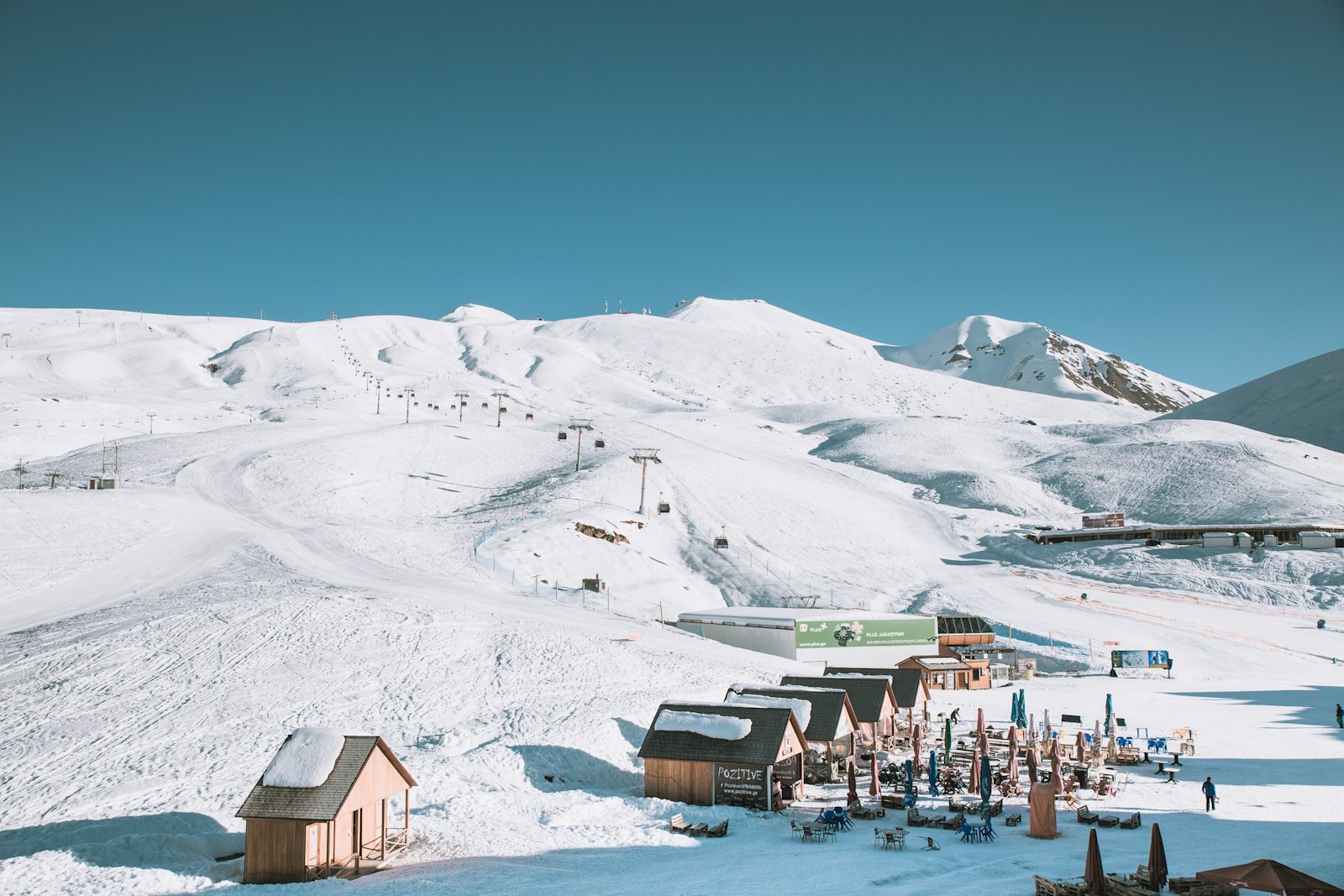
The catered chalet was a British invention, refined in Courchevel. A group of friends, a mid-mountain property, a host who cooked breakfast and dinner and ran the ski-hire paperwork, and an arrangement that felt like a private house without the cost of owning one. The product was built on a labour market that no longer exists: the British twenty-something on a working gap year, willing to earn SMIC in exchange for a ski pass, a staff chalet bunkroom, and eight weeks of the best skiing in Europe. In four winters since Brexit, Courchevel has been watching what happens when the supply of that person dries up.
The scale of the shift
The industry's pre-Brexit estimate of British seasonal workers in the French Alps runs at 20,000–25,000 in winter; Courchevel's resort authority calculates that the Trois Vallées peak employment — across all operators — had a British share of roughly 40% in hospitality roles before 2020. The work-visa requirements for non-EU workers, which now apply to British passport holders, require employer sponsorship through an official process. The pathway exists; the friction is real:
- Sponsorship requires an employer to hold a licence, pay a fee, and demonstrate that the role could not be filled by an EU worker — a hard argument to make for a catered chalet cook.
- Salary minimums for sponsored roles exceed the SMIC, changing the economics of the catered-chalet operator who priced their product on near-minimum-wage labour.
- The five-month season makes sponsorship particularly unattractive relative to a permanent-role sponsor arrangement.
In practice, most Courchevel operators have stopped trying to sponsor British workers and have reoriented recruitment to France, Belgium, the Netherlands and — most interestingly — Australia and New Zealand, which have long-standing working-holiday agreements with France that face none of the Brexit friction.
"Our best host this season was from Christchurch. We have two returning Australians next year. The British pipeline isn't coming back — we've stopped waiting for it."
Catered chalet operator, Courchevel 1850 — nine properties
What has changed in the product
The catered chalet has not died, but it has evolved under cost pressure in ways that guests notice. Three changes stand out:
- Fewer nightly dinners. The seven-nights-full-board model is giving way to five or six dinners, with one or two evenings in resort at the operator's recommendation — reducing kitchen labour without dramatically affecting the product's appeal.
- Professionalism as a selling point. Operators who have replaced the gap-year host with a trained cook are discovering that the product quality has improved and, with it, the price they can charge. A chalet host who has catering qualifications and three seasons in the Alps commands a salary 30–40% above the old SMIC rate — and produces food that justifies a premium.
- The management contract model. Some property owners who previously operated their chalets as catered lets through tour operators have moved to fully serviced management contracts — outsourcing the employer relationship to a specialist company in exchange for a per-night fee rather than a rental income share. The chalet company bears the staffing risk; the owner receives a reliable income regardless of occupancy.
The owner's perspective
For chalet owners whose properties are operated by a tour operator under a lease, the post-Brexit staffing crisis has been someone else's problem — until the lease renewal, when the operator's changed economics became legible in the commercial terms they offered. Several owners at our spring reader event described receiving revised proposals from operators who wanted either a reduced rental guarantee, a shorter season, or a share of the food and drinks margin that was previously included in the lease rate. The operators' logic is honest: they are passing through a genuine cost increase. The owners' counter is that the chalet's reputation — and the return guests, who represent 60–70% of occupied weeks in a well-managed property — is the owner's asset, and degrading the service to manage a staffing cost is a trade that destroys more than it saves.
The resolution most owners and operators seem to be converging on is shorter seasons (12–14 weeks from Christmas to late March rather than 18–20), higher per-night rates enabled by genuinely better service, and a guest profile that is older, better-funded, and less tolerant of the endearingly amateur cooking that once defined the product. This is, broadly, the Courchevel direction anyway. The chalet sector arrived at a version of the resort's own direction by a route nobody planned.
What the next generation of British workers faces
The story is not that British workers cannot go to the Alps; it is that the informal working-gap-year route has closed. British workers who want to spend a winter in Courchevel legally now face the same process as any non-EU worker: a job offer that includes sponsorship, or a prior claim to French residency through a spouse, civil partnership, or a long-stay visa. The long-stay visitor visa (VLS-T, covered in our 90/180 explainer) is not a work permit — the "no paid activity" condition is real, and the enforcement environment since EES is closer than the old stamp-and-squint regime. The more realistic legal path for a British worker who wants to spend a season in France is to apply for a visa de travail saisonnier through a sponsoring employer, using France's official portal at france-visas.gouv.fr, at least twelve weeks before the intended arrival. It is more paperwork than an easyJet booking and a handshake. The Alps are still there. The frictionless access, for now, is not.
The visa routes that exist, in detail
The statement "British workers can no longer go to the Alps" is not accurate. The accurate statement is that British workers can no longer go casually, informally, and without employer paperwork. The routes that exist:
- Visa de travail saisonnier. The seasonal work visa for non-EU nationals. Requires a sponsoring employer who has filed a request through the OFII (Office Français de l'Immigration et de l'Intégration) system. Process time: 8–12 weeks from employer request to visa issue. Salary must meet SMIC. The employer must first advertise the position in France and demonstrate no equivalent qualified candidate was found — a requirement that is, in practice, soft for specialist roles (ski host, chalet cook) but harder for generic service roles.
- Working-holiday agreement. France has working-holiday agreements with Australia, New Zealand, Canada, Japan, Argentina, South Korea and several other countries — not the UK. British workers do not have access to this route. Australians and New Zealanders aged 18–30 may work in France for up to 12 months under the Accord Vacances Travail; the application is made in the home country before departure.
- EU freedom of movement remnant. British nationals who held EU settled status before June 2021 and have maintained it retain free movement rights. The number of British seasonal workers who qualify is declining as status lapses without renewal.
- French citizen or résidence. British nationals who have obtained French nationality (possible after five years of habitual residence) or a long-term residency card may work without restriction.
The Courchevel catered chalet: what it actually costs to run
| Cost item | Pre-2020 estimate | 2026 estimate | Change |
|---|---|---|---|
| Host salary (1 person) | SMIC + ski pass ≈ €1,600/mo | Qualified cook + visa ≈ €2,200/mo | +38% |
| Host accommodation | Included in staff chalet | Staff chalet cost risen 25%/bed | +25% |
| Employer OFII / visa fee | €0 | ≈ €400 per seasonal worker | New cost |
| Food and drink provision | Included at flat rate | Supply chain inflation: +18% | +18% |
A well-run eight-guest chalet that required one host pre-Brexit (perhaps with a local cleaner for changeover days) now typically requires one qualified cook and a half-time local cleaning/concierge support, because the host's catering responsibilities have been professionalised and the administrative burden — guest transfers, ski hire coordination, activity booking — has not reduced. Total labour cost per season: up 35–45% on 2019 figures, concentrated in the accommodation and salary lines.
The owner who operates directly
A distinct cohort of chalet owners — those who run their own catered chalet and are not operating through a tour operator — face a different version of the same problem. They are both the employer and the operational risk-bearer, and the staffing market they face is the same one the tour operators compete in. The owner-operators who report the least difficulty are, uniformly, those who have built a relationship over multiple seasons with a specific cook or couple — sometimes Australian or French, occasionally British with the paperwork in order — and who treat the recruitment as a twelve-month relationship, not a September emergency. The ones who report serious difficulty are those who relied on a network of informal referrals (the Facebook groups, the bar conversations) that connected willing British workers to chalet owners outside any formal hiring process. That network is significantly smaller than it was; it still exists, but it is no longer a reliable pipeline.
What guests notice
The honest account, from agency feedback and from guests returning to the same chalets: most guests do not notice the staffing change. They notice the price change — catered chalet prices have risen 20–30% since 2019 in Courchevel 1850 across most operators. The meal quality, where operators have moved to trained cooks, is frequently better than it was under the gap-year model. The cordiality is different — the Australian host has a different warmth register than the British one — but the service quality is not degraded. The guests who notice and care most are returning guests who had a specific relationship with a specific host; they are also the most valuable guests, commercially, and the operator who invests in staff retention across multiple seasons — housing the same person in the same staff accommodation, maintaining the relationship in the off-season — is the one who keeps them.
Related: the staff housing shortage that drives much of the cost increase, and the immigration rules that British workers now navigate.
[Preview edition — this article is illustrative while Issue No. 1 is in preparation.]
Advertisement
Partner · Property
Domosno
New-build and resale ski property across the French Alps. English-speaking, VAT-reclaim specialists.
View listings