Infrastructure · Lifts
Chamonix confirms 2028 replacement for the Plan Praz gondola
The €38m project will cut queue times at Brévent by half — but the price is two summers without the valley's favourite lift, and the paragliding community is doing the maths.
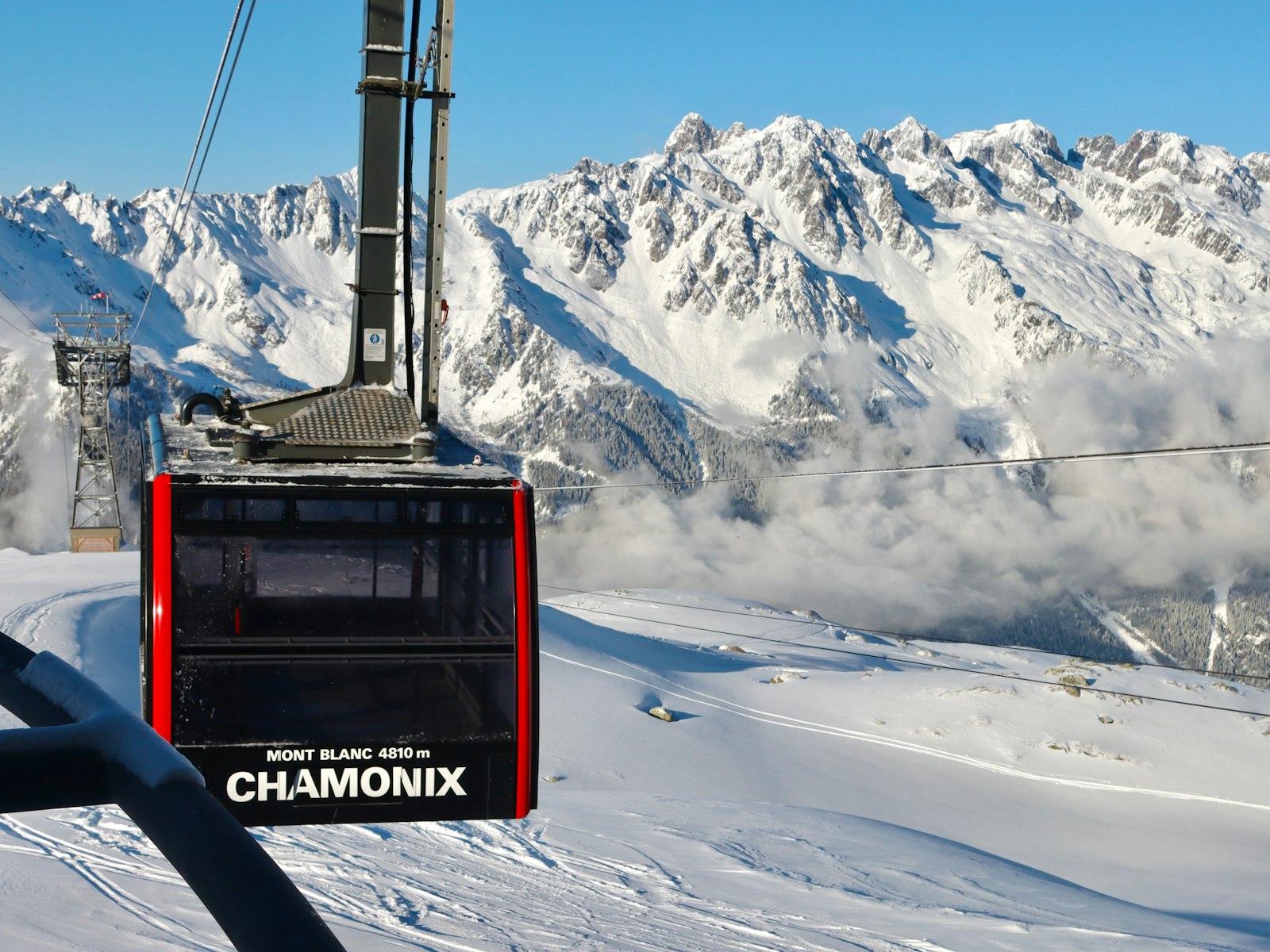
The worst-kept secret in the valley is now official. The Compagnie du Mont-Blanc confirmed on Tuesday that the Planpraz gondola — the lift that hauls skiers, hikers and half the world's paragliders from the centre of Chamonix to 2,000 metres — will be replaced entirely, with the new installation targeted for December 2028.
What is being built
The replacement is a ten-seat gondola on the existing line, lifting capacity from roughly 1,500 to 2,600 passengers per hour. The bottom station keeps its town-centre footprint but gains a proper queuing hall — no more Saturday-morning spirals around the car park — while the top station is rebuilt with a dedicated launch-side exit for paragliders and their kit.
- Budget: €38m, financed by the Compagnie du Mont-Blanc under its delegation agreement, with the commune contributing to the station buildings.
- Capacity: +73%, with journey time cut from twelve minutes to under eight.
- Energy: the operator claims a 20% reduction in consumption per passenger, the now-standard direct-drive argument.
The cost: two summers dark
Here is the part the press release put in paragraph nine. Demolition and rebuild require the lift to close after the 2026–27 winter and remain shut through the summers of 2027 and 2028, reopening for the 2028–29 season. Winter access to Brévent–Flégère will route through the Flégère gateway at Les Praz, which is being given temporary capacity upgrades.
For summer, there is no equivalent workaround. Planpraz is the launch site for the valley's paragliding trade — several thousand tandem flights in a good July — and the walking access to the Grand Balcon Sud. Operators are already negotiating shuttle arrangements to Flégère, but nobody pretends it is the same product.
"Two summers is a mortgage payment problem, not an inconvenience."
Tandem pilot, Chamonix — fifteen seasons at Planpraz
What it does to the property map
Lift investment moves Alpine property values with a reliability that estate agents can only envy. The Brévent side of Chamonix — the sunny side — already trades at a premium to the valley average, and agents report that the announcement has been quietly priced in since the environmental filings became public in March. The more interesting effect may be at Les Praz, which inherits two winters of increased through-traffic and permanent capacity upgrades at Flégère: a small, dull, structural improvement of exactly the kind that compounds.
The project still requires final sign-off on two technical permits, expected in the autumn. The Compagnie's record on Alpine timelines is, by the standards of the industry, good — the Flégère replacement landed on schedule in 2019. The valley will spend two summers grumbling, and then, most likely, forget the old lift within a season. That is how it always goes.
The wider lift arms race
Plan Praz is one project in the most intense period of lift investment the French Alps have seen since the 1992 Albertville Olympics. The Compagnie du Mont-Blanc's own plan for the valley runs to roughly €477m over the coming decades under its delegation agreement; across the border of the massif, Courchevel, Méribel and La Plagne have all opened or announced ten-place gondolas in the past three seasons. The logic is uniform: fewer, bigger, faster lifts consume less energy per passenger, need fewer staff, and — the part the brochures put more quietly — concentrate skiers onto the terrain that snowmaking can defend as winters warm.
For Chamonix specifically, the sequencing matters because the valley's lifts are its circulation system in both seasons. The town's tourist office (chamonix.com) lists sixteen summer-operating installations; Planpraz is consistently among the three busiest, with the Aiguille du Midi and the Montenvers rack railway. Take one of the three out for two summers and the load redistributes — onto Flégère's temporary upgrades, onto the Montenvers queue, and onto the trailheads reachable by the valley bus.
What two dark summers cost, in numbers
Nobody publishes a précis of the Planpraz summer economy, so we assembled one from operator interviews and the visitor statistics the Compagnie files with the commune. Treat the figures as informed estimates:
| Activity | Typical summer volume | Revenue at risk / season |
|---|---|---|
| Lift passages (pedestrian) | ≈ 210,000 | ≈ €4.6m |
| Tandem paragliding flights | ≈ 14,000 | ≈ €2.5m (at €130–260/flight) |
| Restaurant & kiosk trade at 2,000 m | — | ≈ €1.1m |
| Guided walking (Grand Balcon Sud) | ≈ 3,500 clients | ≈ €0.4m |
Roughly €8m of activity per summer, then, must either migrate to Flégère and the Aiguille du Midi or evaporate. The paragliding schools are the least mobile: Planpraz's launch is the training site, certified for tandem commercial flight in a way the alternatives only partly replicate. Expect a two-summer bulge in road-shuttled launches from Plaine Joux and some plain attrition.
Who pays, and how the model works
French ski-area lifts are almost never municipal purchases. The commune (or a syndicate of communes) owns the concession and delegates operation — a délégation de service public — to an operator who commits to an investment schedule in exchange for the ticket revenue. Chamonix's delegation with the Compagnie du Mont-Blanc runs to 2059, which is precisely what makes a €38m single-lift commitment bankable: the operator amortises it over decades of lift passes. The structure's critics note its flip side — investment follows the operator's revenue map, and the revenue map follows the crowds. The uphill capacity of the quiet corners of the valley has barely moved in thirty years.
The timeline to hold the operator to
| Date | Milestone |
|---|---|
| Autumn 2026 | Final technical permits (STRMTG) expected |
| April 2027 | Last runs of the 1980-line cabins; demolition begins |
| Summers 2027–28 | No lift access to Planpraz; Flégère reinforced |
| December 2028 | Target opening of the new gondola |
| 2029 | Top-station paragliding deck completed (phase 2) |
Planning around the closure: a visitor's and owner's guide
If your chalet weeks or rental season fall in the summers of 2027 or 2028, plan now rather than grumble later. The valley's other high-altitude accesses all continue to run: the Aiguille du Midi cable car (book the first bench of the morning and the 3,842 m station before the clouds build), the Montenvers rack railway to the Mer de Glace with its rebuilt glacier centre, the Tramway du Mont-Blanc from Saint-Gervais to the Nid d'Aigle, and Flégère from Les Praz — which inherits Planpraz's balcony-trail traffic and will be the busy one. Booking platforms and live queue information are consolidated on chamonix.com.
For the Grand Balcon Sud itself, the classic Planpraz–Flégère traverse simply reverses: ride Flégère up, walk south, descend on foot via the Brévent path or loop back. Paragliding customers should book with schools early — capacity will be the constraint, not weather — and expect some launches shuttled to Plaine Joux on the Passy side. Owners letting their properties should brief guests honestly in listings: "Brévent lift closed for rebuild, Flégère 10 minutes by free bus" costs a booking less than a guest discovering it on arrival costs a review. And if you are pricing a purchase on the Brévent side during the works, remember the market's habit: inconvenience is priced in at announcement and forgotten at reopening — the two dark summers may be the best buying window that side of the valley sees this decade.
Related: what June's rescue logs say about the crowds these lifts deliver, and the workforce that has to staff the new stations.
[Preview edition — this article is illustrative while Issue No. 1 is in preparation.]
Advertisement
Partner · Property
Domosno
New-build and resale ski property across the French Alps. English-speaking, VAT-reclaim specialists.
View listings